According to the National Park Service Visitor Use Statistics (2023), Glacier National Park welcomed over 3 million visitors, and the trails are the main reason people make the trip. The problem most first-time visitors face is the same: too many options, too little time, and no clear sense of which trails are worth the effort and which ones just sound good on paper.
This guide solves that. Glacier National Park hiking refers to exploring the park's 700+ miles of maintained trails through one of the most geologically dramatic landscapes in North America. Think jagged peaks, turquoise glacial lakes, active glaciers, and mountain passes draped in wildflowers, all accessible on foot, often on the same trail.
The 10 trails below are ranked by a combination of scenery and practical difficulty, so you can find exactly the right hike for your fitness level and available time. We start with the most scenic and work our way up to the one trail that earns the top spot for good reason.
What Makes Hiking in Glacier National Park Unlike Anywhere Else?
Glacier offers something most parks simply can't: raw, unfiltered alpine wilderness within a day-hike distance from a parking lot. The park sits in the Northern Rocky Mountains along the U.S.-Canada border and preserves one of the last intact mountain ecosystems in the lower 48 states.
A few things set it apart from other hiking destinations:
- Active glaciers you can actually reach on foot. The Grinnell Glacier Trail puts you within meters of a living glacier, something most hikers never experience.
- Wildlife density. Grizzly bears, mountain goats, bighorn sheep, moose, and wolverines all live here in meaningful numbers.
- Geological variety on single trails. One hike can take you through cedar forests, wildflower meadows, alpine tundra, and glacial basins.
- The Going-to-the-Sun Road. This 50-mile scenic highway bisects the park and provides trailhead access to some of the best hiking trails in Glacier National Park, including the famous Highline Trail.
According to the U.S. Geological Survey's Glacier Monitoring Program, the park's named glaciers have shrunk dramatically over the past century, which makes hiking here feel genuinely time-sensitive. Seeing these landscapes on foot, now, is something future generations may not be able to do in the same way.
How Do the 10 Best Hikes in Glacier National Park Stack Up?
Here's a quick overview before we dive into each trail in detail.
| Rank | Trail | Distance | Difficulty | Scenery Rating |
| #1 | Highline Trail to Granite Park Chalet | 11.4 mi one way | Challenging | 10/10 |
| #2 | Grinnell Glacier Trail | 10.6 mi round trip | Challenging | 10/10 |
| #3 | Ptarmigan Tunnel Trail | 10.6 mi round trip | Challenging | 9.5/10 |
| #4 | Siyeh Pass Trail | 10.4 mi one way | Challenging | 9.5/10 |
| #5 | Highline Trail to Haystack Pass | 7.6 mi round trip | Moderate-Challenging | 9.5/10 |
| #6 | Iceberg Lake Trail | 9.7 mi round trip | Moderate | 9/10 |
| #7 | Grinnell Lake Trail | 7.6 mi round trip | Moderate | 8.5/10 |
| #8 | Virginia Falls Trail | 3.8 mi round trip | Easy-Moderate | 8.5/10 |
| #9 | Hidden Lake Overlook Trail | 2.7 mi round trip | Easy | 8/10 |
| #10 | Avalanche Lake Trail | 4.5 mi round trip | Easy-Moderate | 7.5/10 |
The 10 Best Glacier National Park Hiking Trails, Ranked
#10 - Avalanche Lake Trail
- Scenery Rating: 7.5/10
- Difficulty: Easy to Moderate
Trail Snapshot
- Distance: 4.5 miles round trip
- Elevation Gain: 500 feet
- Estimated Time: 2-3 hours
- Best Season: June through October
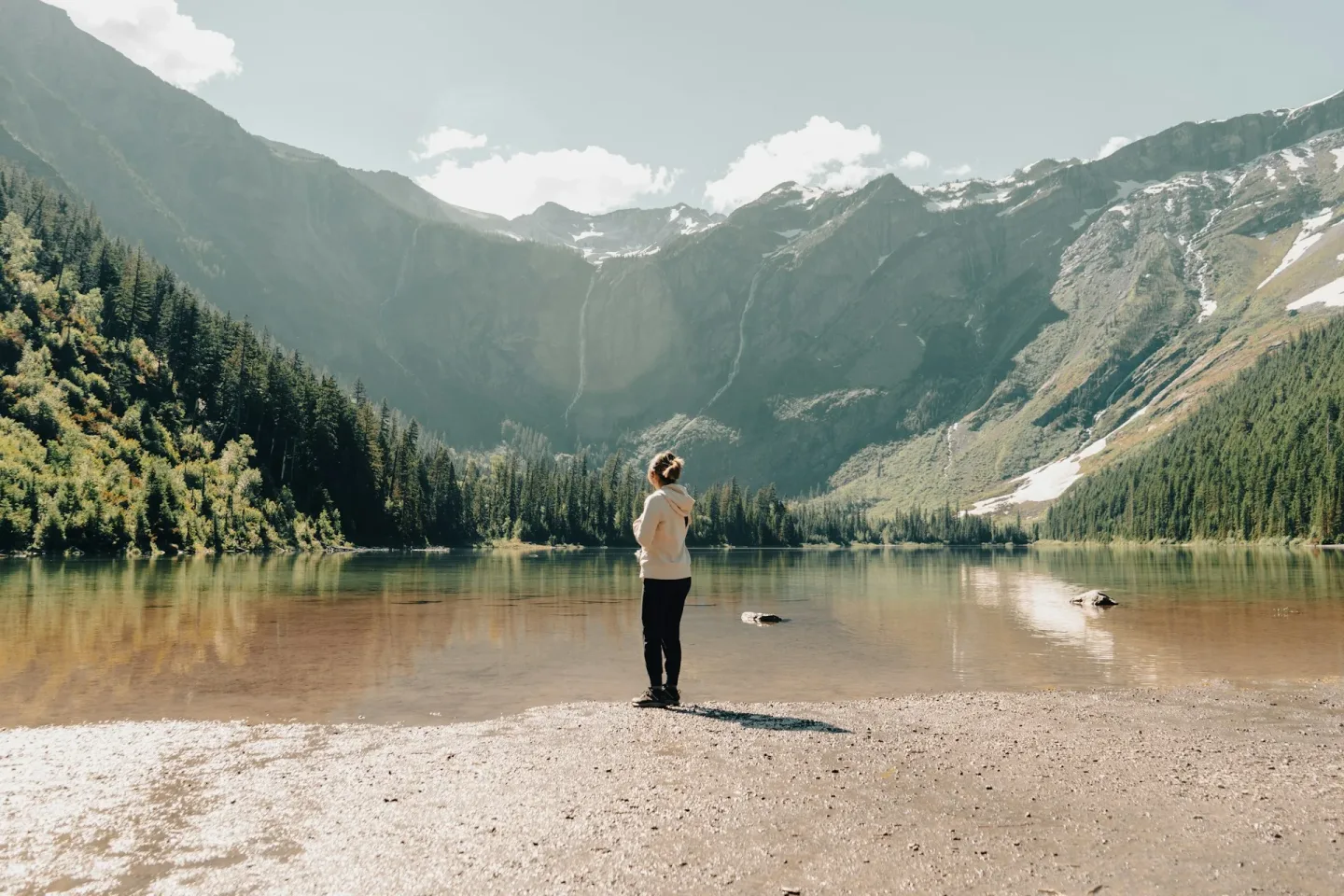
Avalanche Lake is the ideal first hike in Glacier National Park for visitors who want maximum impact without a grueling climb. The trail begins on a flat boardwalk through Avalanche Gorge, where red and green rock walls rise above a rushing creek, one of the most photogenic short walks in the entire park.
The lake itself sits in a glacier-carved cirque with waterfalls pouring down the surrounding cliffs. The gorge boardwalk alone is worth the trip, even if you turn back at the lake. Wildlife sightings (deer, eagles, and occasional black bears) are common in the forest section.
Who This Hike Is Best For: Families with kids, first-time Glacier visitors, anyone looking for a stunning, easy-win hike early in a trip.
Pro Tip: Go early; the Avalanche Creek trailhead is one of the busiest in the park. Arrive before 8:00 AM or take the park shuttle to avoid parking headaches.
#9 - Hidden Lake Overlook Trail
- Scenery Rating: 8/10
- Difficulty: Easy
Trail Snapshot
- Distance: 2.7 miles round trip
- Elevation Gain: 540 feet
- Estimated Time: 1.5-2.5 hours
- Best Season: July through September (snow can linger into early July)
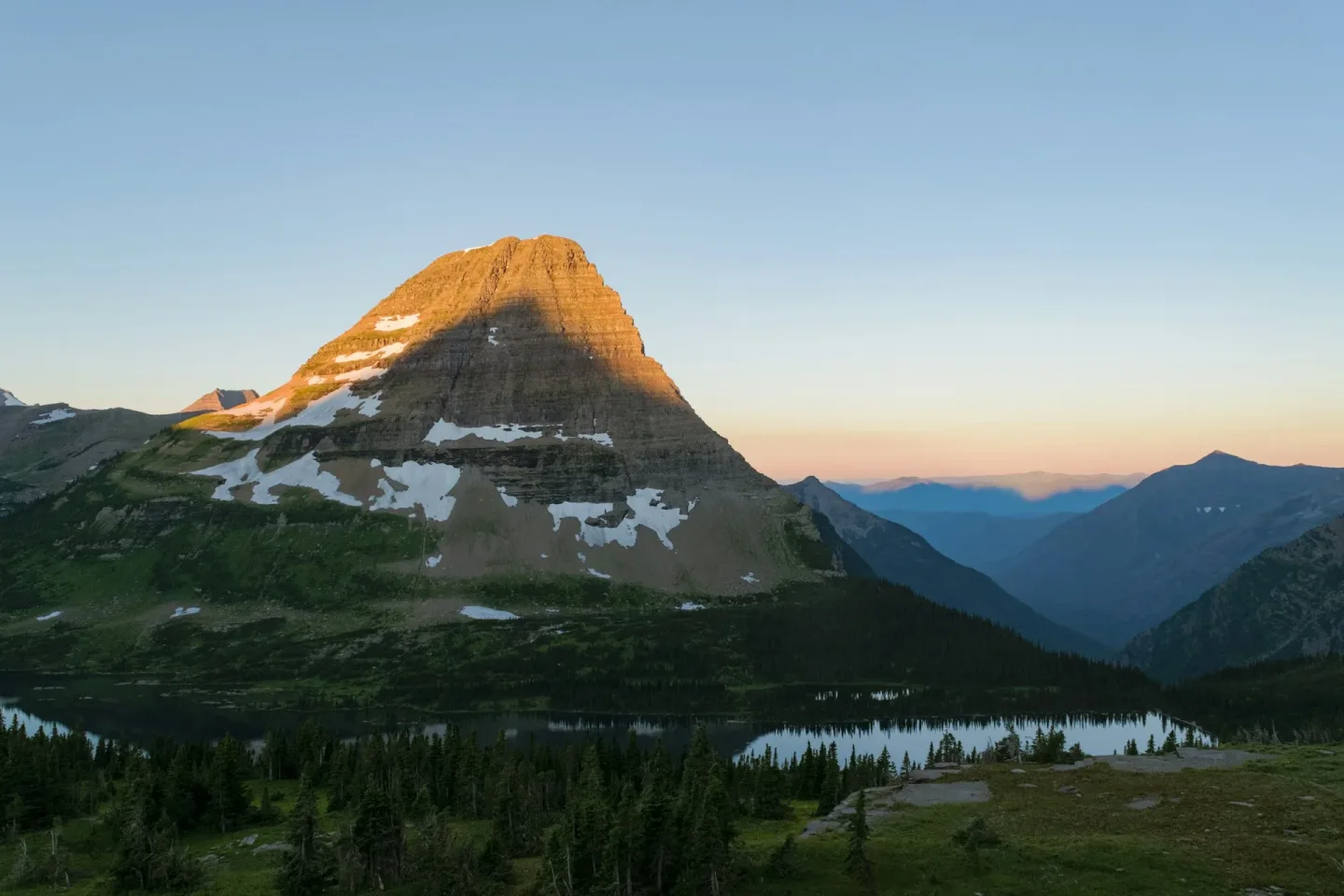
Hidden Lake Overlook starts at Logan Pass, the highest point on the Going-to-the-Sun Road at 6,646 feet, which means you start the hike already in the alpine zone. The trail crosses open meadows of wildflowers and beargrass before reaching the overlook above Hidden Lake, with Clements Mountain framing the background.
Mountain goats are almost guaranteed here. The Logan Pass area has one of the highest concentrations of habituated goats in North America, and they often walk directly along the trail. The panoramic views from the overlook are some of the most accessible in all of Glacier.
Who This Hike Is Best For: First-time visitors, families, anyone short on time who wants a genuine alpine experience.
Pro Tip: Logan Pass fills to capacity by 8:00-9:00 AM most summer days. Either arrive very early or take the Going-to-the-Sun Road shuttle; it's the most reliable way to secure access to this trailhead.
#8 - Virginia Falls Trail
- Scenery Rating: 8.5/10
- Difficulty: Easy to Moderate
Trail Snapshot
- Distance: 3.8 miles round trip
- Elevation Gain: 450 feet
- Estimated Time: 2-3 hours
- Best Season: June through October
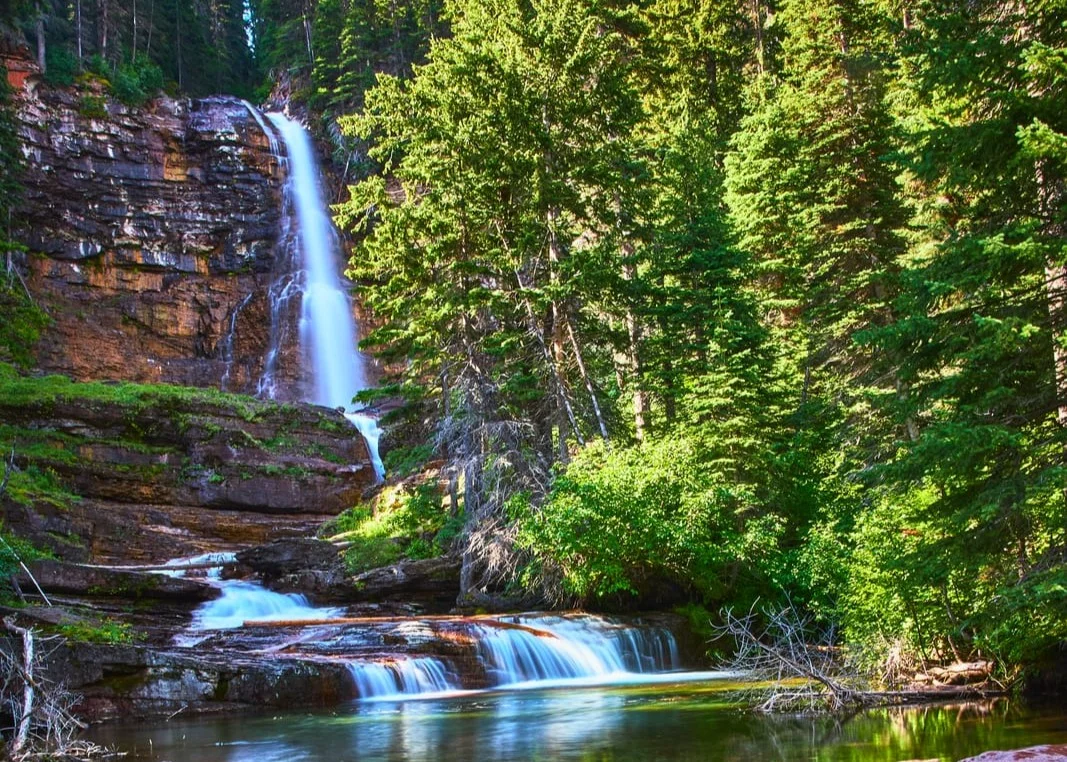
The Virginia Falls Trail in the St. Mary area of the park delivers two rewarding waterfalls in a single out-and-back hike. St. Mary Falls comes first, a narrow cascade through a rocky slot, followed by the taller and more dramatic Virginia Falls, a short distance beyond.
This is one of the most underrated hikes in Glacier National Park, partly because it sits on the east side of the park away from the Going-to-the-Sun Road crowds. The trail follows St. Mary River through open terrain with views of surrounding peaks, and the waterfalls themselves are best in late spring and early summer when snowmelt is at its peak.
Who This Hike Is Best For: Families with kids, visitors based on the east side of the park, and anyone who loves waterfall hikes without a major climb.
Pro Tip: Combine this with a visit to nearby St. Mary Lake for a full day on the east side of the park.
#7 - Grinnell Lake Trail
- Scenery Rating: 8.5/10
- Difficulty: Moderate
Trail Snapshot
- Distance: 7.6 miles round trip
- Elevation Gain: 600 feet
- Estimated Time: 3-5 hours
- Best Season: July through September
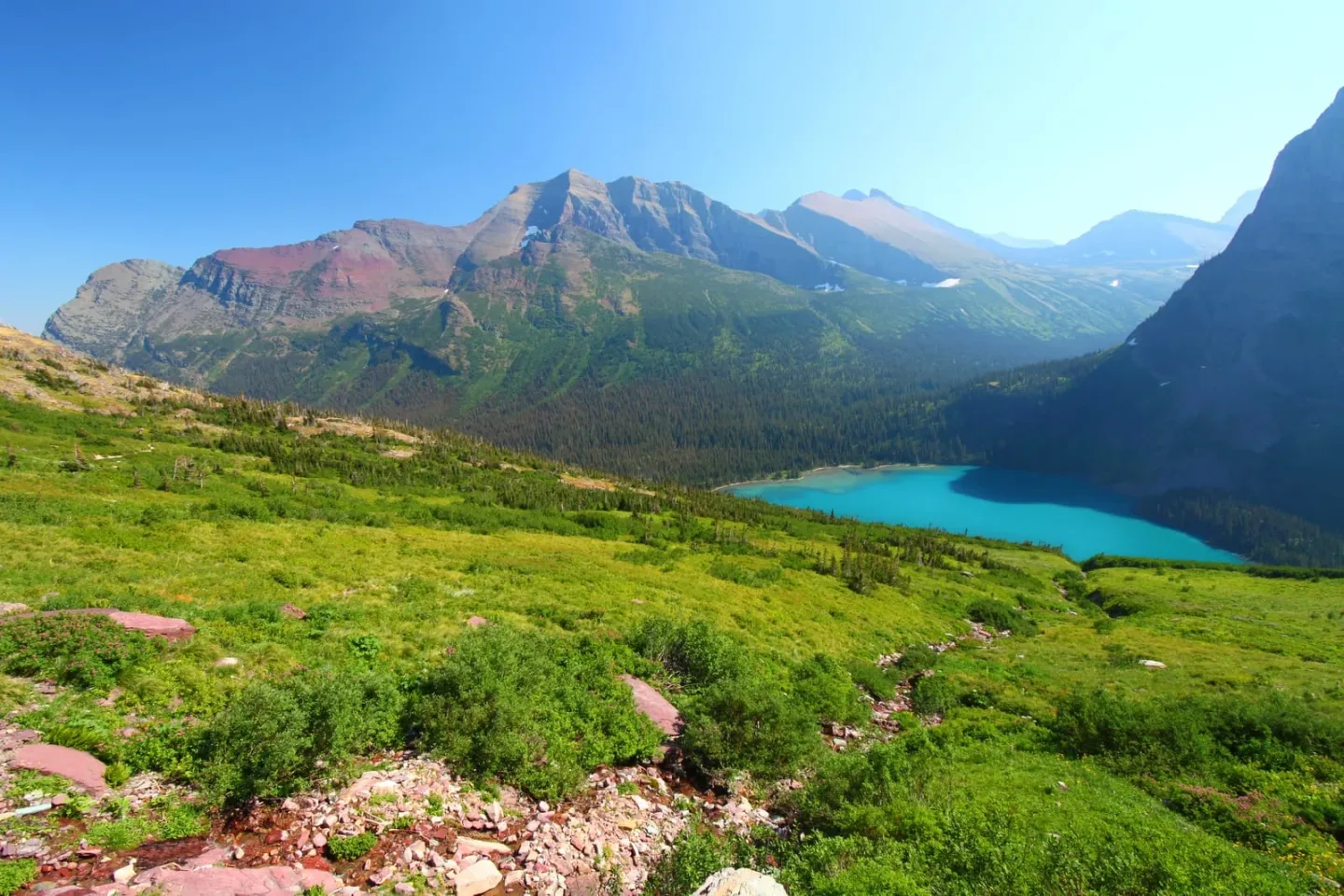
Grinnell Lake is one of those places that looks almost too vivid to be real. The lake's turquoise color comes from glacial flour, fine rock particles suspended in the water from the Grinnell Glacier above, and it sits in a wide valley with grizzly habitat on all sides.
The trail is relatively flat for Glacier standards, which makes it a great option for hikers who want serious scenery without serious elevation. Wildlife sightings on this trail are among the most frequent in the park; grizzlies, black bears, moose, and eagles are all regularly spotted in the Many Glacier valley.
Who This Hike Is Best For: Moderate hikers, wildlife enthusiasts, visitors who want glacier-colored water views without tackling the Grinnell Glacier Trail itself.
Pro Tip: Consider taking the boat shuttle across Swiftcurrent Lake and Lake Josephine to shorten the hike to 3.8 miles round trip. It's one of the best shortcuts in Glacier.
#6 - Iceberg Lake Trail
Scenery Rating: 9/10
Difficulty: Moderate
Trail Snapshot
- Distance: 9.7 miles round trip
- Elevation Gain: 1,200 feet
- Estimated Time: 4-6 hours
- Best Season: July through September
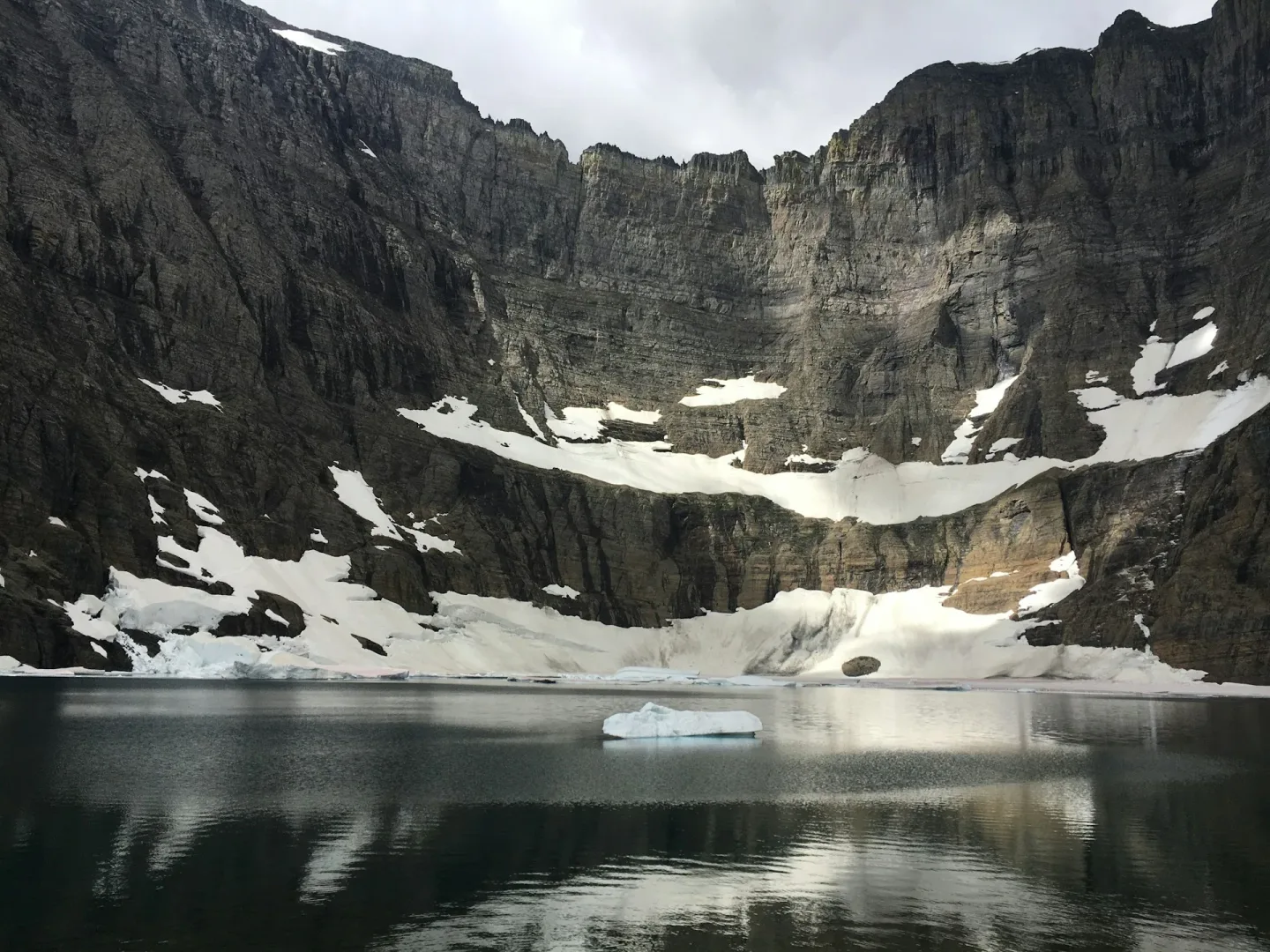
Iceberg Lake sits in a deep glacier-carved bowl at 6,094 feet, cold enough that chunks of ice float on its surface well into August, hence the name. The trail climbs steadily through wildflower-covered meadows and subalpine terrain before arriving at the lake basin, which is dramatic and enclosed on three sides by cliffs.
This is one of the most photographed hikes in Glacier National Park, and it earns that reputation. The combination of the floating icebergs, the cirque walls, and the carpet of wildflowers in July creates a scene that feels genuinely otherworldly. Grizzly bears use this corridor heavily, so bear spray is essential.
Who This Hike Is Best For: Moderately fit hikers ready for a longer day, wildflower lovers, and photographers.
Pro Tip: Late July is peak wildflower season on this trail. Carry bear spray and make noise on the sections with dense brush.
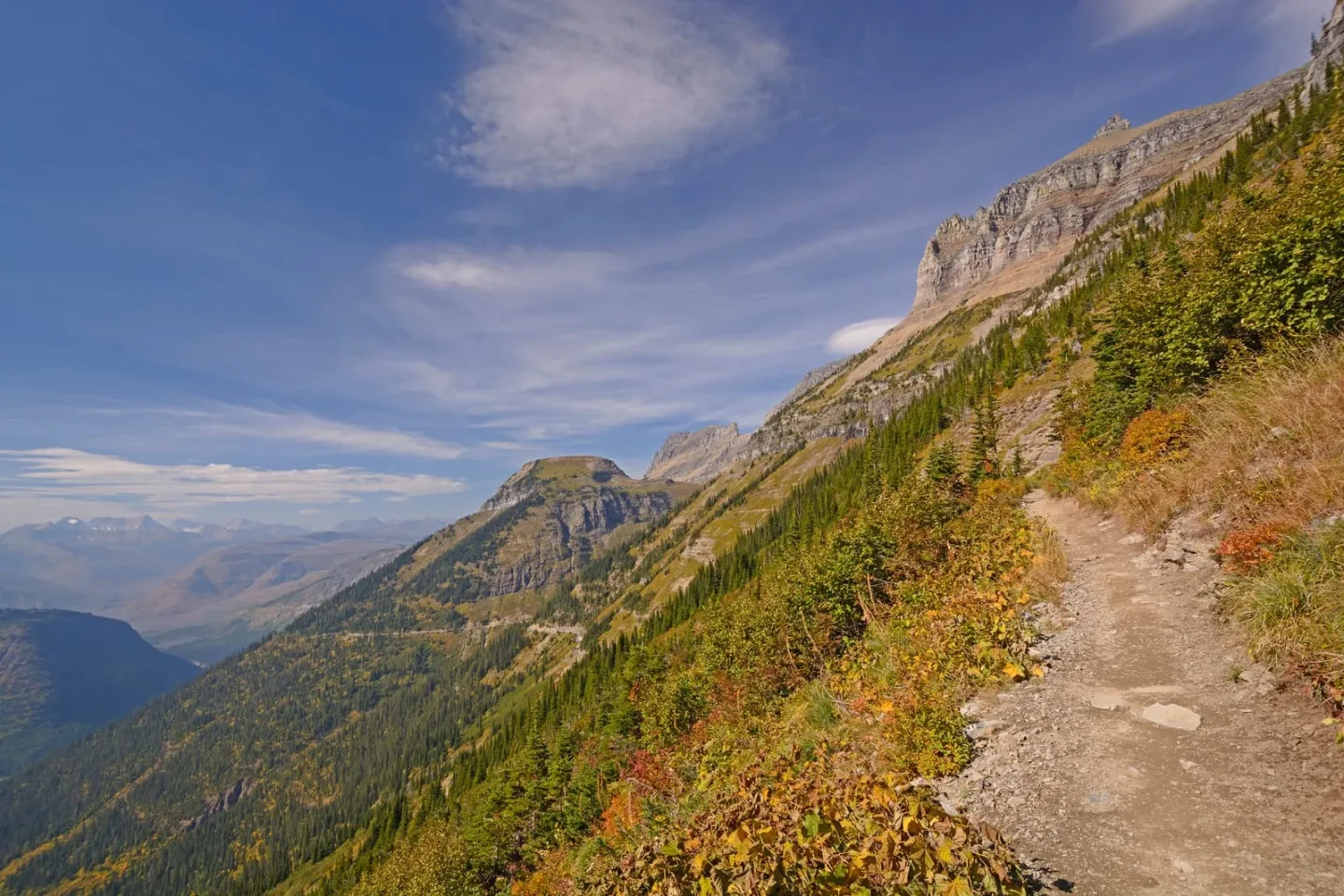
#5 - Highline Trail to Haystack Pass
- Scenery Rating: 9.5/10
- Difficulty: Moderate to Challenging
Trail Snapshot
- Distance: 7.6 miles round trip
- Elevation Gain: 900 feet
- Estimated Time: 4-6 hours
- Best Season: Mid-July through September
The Highline Trail is the most iconic hiking trail in Glacier National Park. This out-and-back version to Haystack Pass gives you the full Highline experience, including the famous cliff-side opening section above the Going-to-the-Sun Road, without committing to the full one-way traverse.
The views are continuous and extraordinary. You walk along the Garden Wall, a glacially carved ridge with the peaks of the Continental Divide rising above you and the Going-to-the-Sun Road disappearing into the valley far below. The exposure on the opening section (where a cable bolted into the rock wall is available for nervous hikers) surprises some people.
Who This Hike Is Best For: Confident hikers comfortable with some exposure, visitors who want the signature Glacier experience with a manageable turnaround point.
Pro Tip: The cable on the opening section is a hand-grab, not a harness system. If heights make you nervous on narrow paths, walk this section deliberately and don't look down.
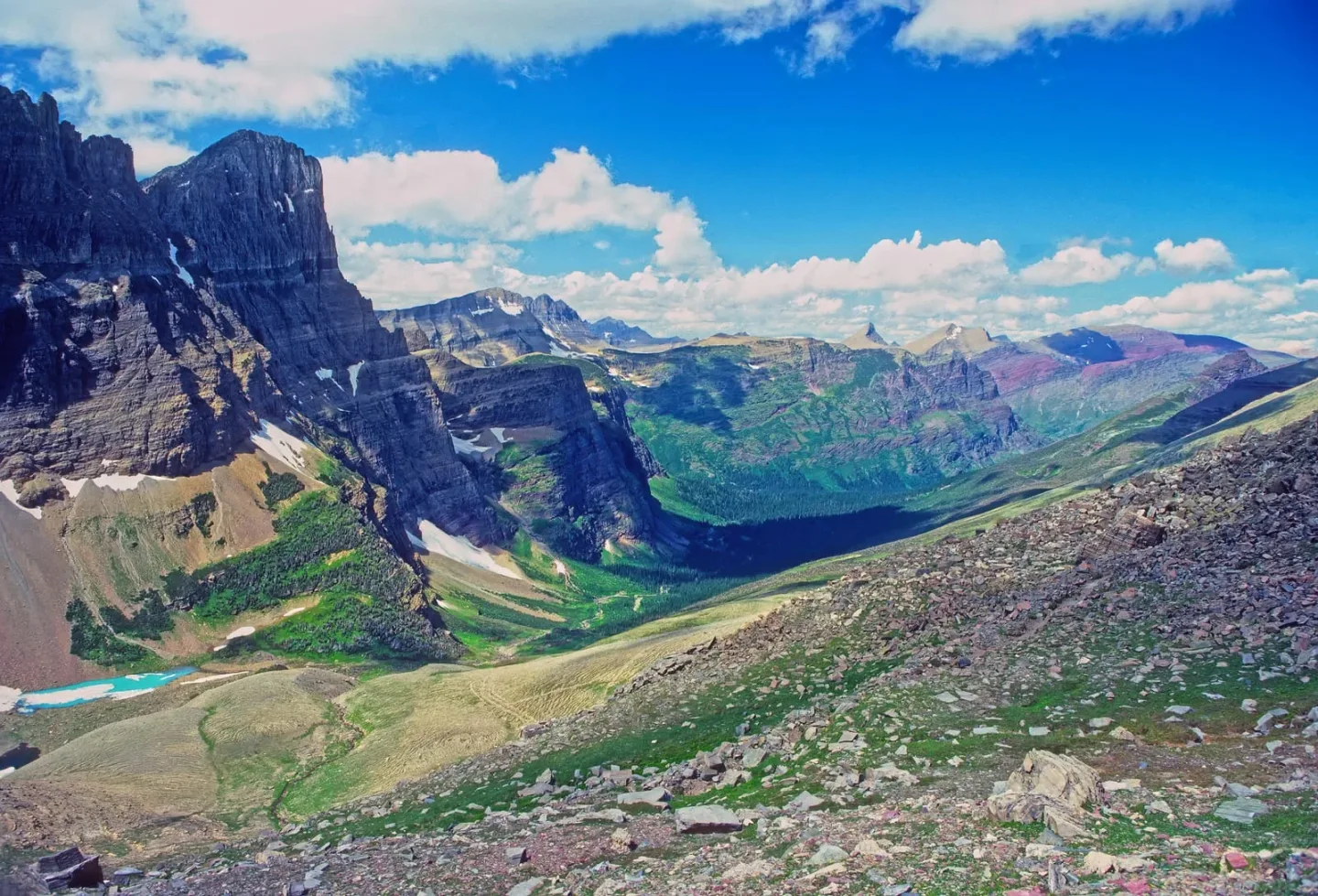
#4 - Siyeh Pass Trail
- Scenery Rating: 9.5/10
- Difficulty: Challenging
Trail Snapshot
- Distance: 10.4 miles one way (shuttle required)
- Elevation Gain: 2,240 feet
- Estimated Time: 6-8 hours
- Best Season: Mid-July through September
Siyeh Pass is one of the least-crowded challenging trails in Glacier, which makes it a hidden gem among experienced hikers. The trail crosses through multiple distinct ecosystems: subalpine forest, wildflower meadows, alpine tundra, and a dramatic high pass at 7,750 feet with views of glaciers and surrounding peaks.
The diversity of the landscape in a single day is genuinely remarkable. You start near Going-to-the-Sun Road, climb past Baring Falls, cross Preston Park's wildflower flats, gain the pass, and descend through open terrain to the finish at Sun Point. It's a point-to-point hike requiring a shuttle or car drop.
Who This Hike Is Best For: Experienced day hikers, those who want Glacier's dramatic passes without the crowds of Grinnell or Highline.
Pro Tip: Set up a car shuttle at Sun Point the night before, or coordinate pickup. This hike doesn't work well as an out-and-back due to the elevation profile.
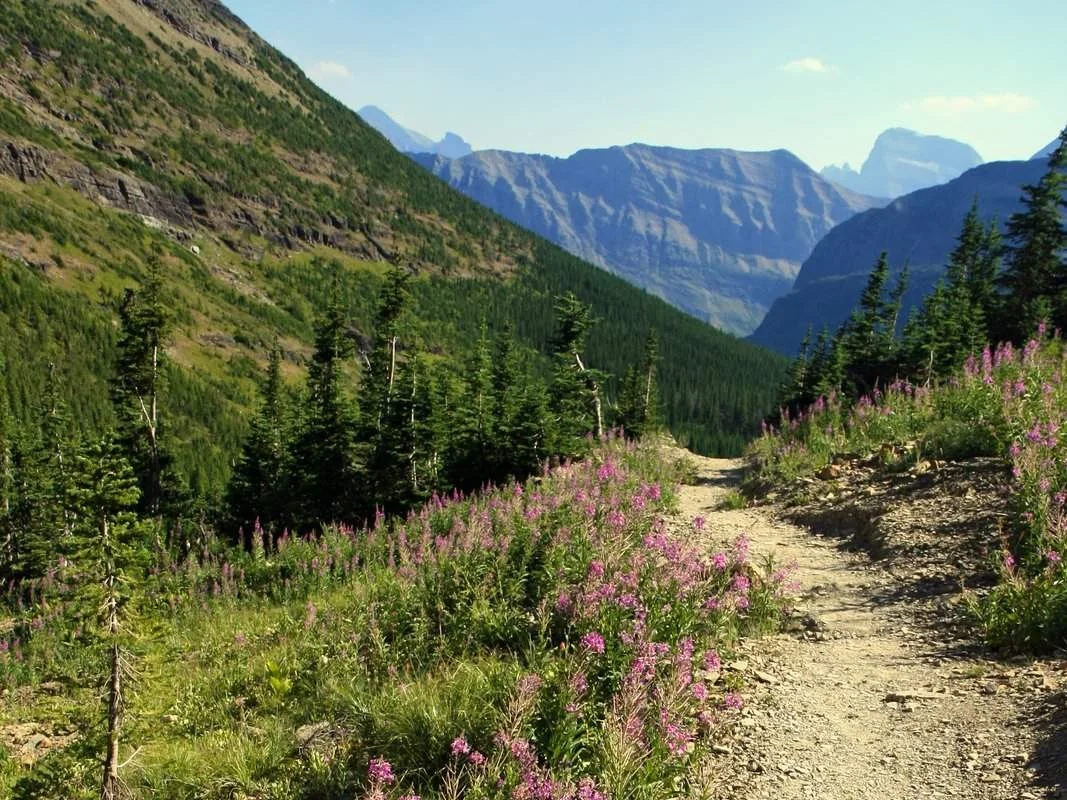
#3 - Ptarmigan Tunnel Trail
- Scenery Rating: 9.5/10
- Difficulty: Challenging
Trail Snapshot
- Distance: 10.6 miles round trip
- Elevation Gain: 2,300 feet
- Estimated Time: 6-9 hours
- Best Season: Mid-July through September
The Ptarmigan Tunnel is exactly what it sounds like: an 183-foot tunnel blasted through the rock of the Ptarmigan Wall in 1931, which connects two completely different mountain landscapes on either side. Walking through it and emerging into a totally different valley is one of the more memorable moments available on any hiking trail in Glacier National Park.
The trail climbs through the Many Glacier valley with wildlife sightings common on the lower sections, then gains serious elevation through open terrain to the tunnel. The view from the tunnel entrance on the south side is among the best in the entire park. The north side opens to the Belly River drainage, and the contrast is striking.
Who This Hike Is Best For: Experienced hikers who want a genuine backcountry feel and a unique destination.
Pro Tip: The trail is exposed and rocky above treeline. Trekking poles make the descent significantly easier on the knees.
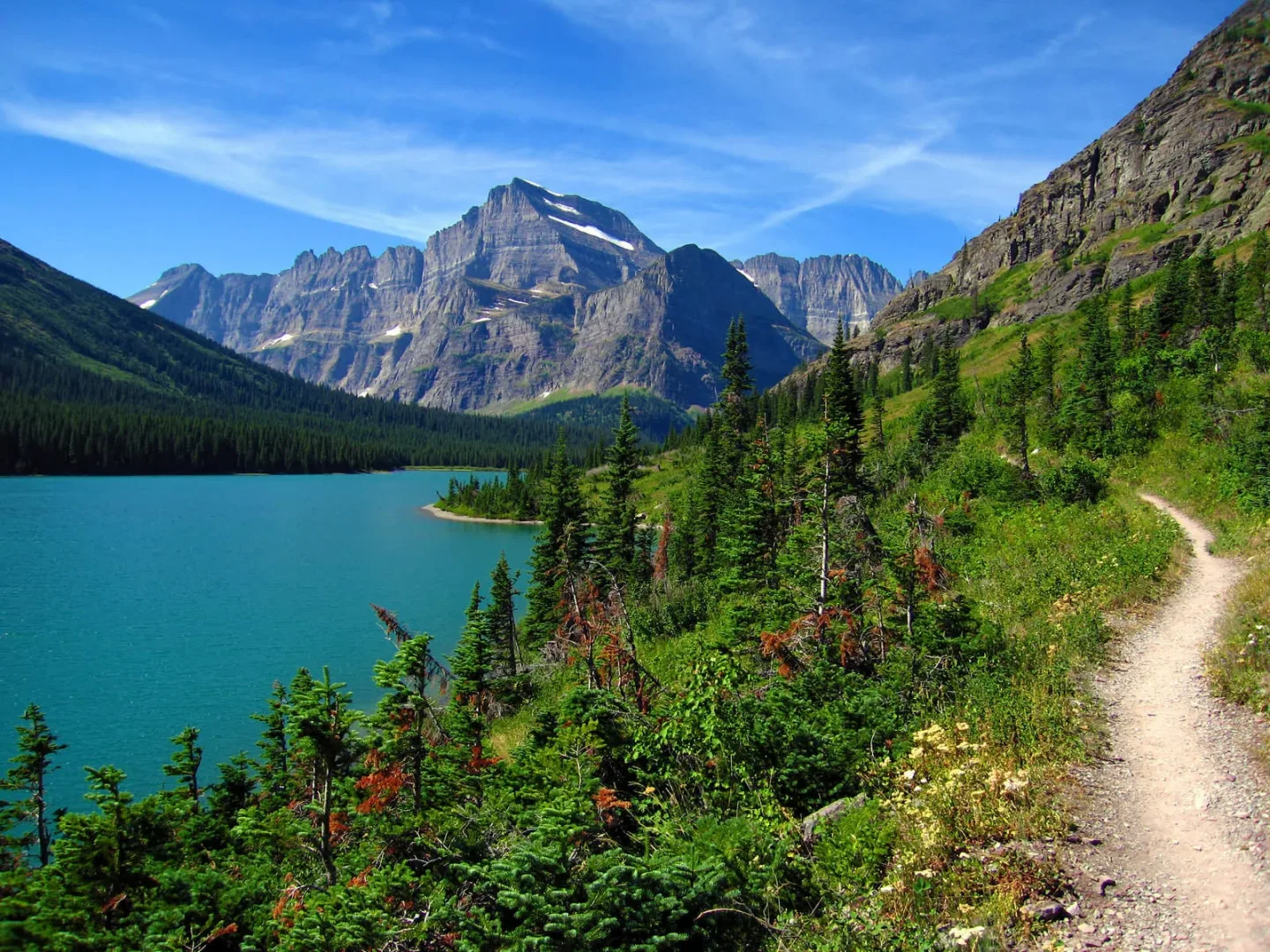
#2 - Grinnell Glacier Trail
- Scenery Rating: 10/10
- Difficulty: Challenging
Trail Snapshot
- Distance: 10.6 miles round trip (7.6 miles with boat shuttles)
- Elevation Gain: 1,600 feet (from trailhead), 900 feet (with boat shuttles)
- Estimated Time: 5-8 hours
- Best Season: Mid-July through September
The Grinnell Glacier Trail is Glacier National Park's signature hike and one of the best hiking experiences in the entire country. The trail climbs from the Many Glacier valley through a series of increasingly dramatic viewpoints, turquoise lakes below, cascading waterfalls beside the trail, and eventually the Grinnell Glacier itself, spread across the upper basin.
Standing at the edge of the glacier is an experience that changes how you think about these landscapes. The contrast between the white ice, the vivid blue-green of Upper Grinnell Lake, and the surrounding peaks creates scenery that photographs can't fully capture. Grizzly bears are regularly spotted here; carry bear spray and know how to use it.
Who This Hike Is Best For: Fit hikers with solid trail experience, anyone for whom this is a bucket-list destination.
Pro Tip: Take the boat shuttles across Swiftcurrent Lake and Lake Josephine. They shorten the round trip by 3 miles, and the boat ride itself is beautiful. Book in advance at the Many Glacier Hotel front desk or online.
#1 - Highline Trail to Granite Park Chalet
- Scenery Rating: 10/10
- Difficulty: Challenging
Trail Snapshot
- Distance: 11.4 miles one way (shuttle required)
- Elevation Gain: 830 feet up, 2,200 feet down (ending at The Loop)
- Estimated Time: 5-8 hours
- Best Season: Mid-July through September
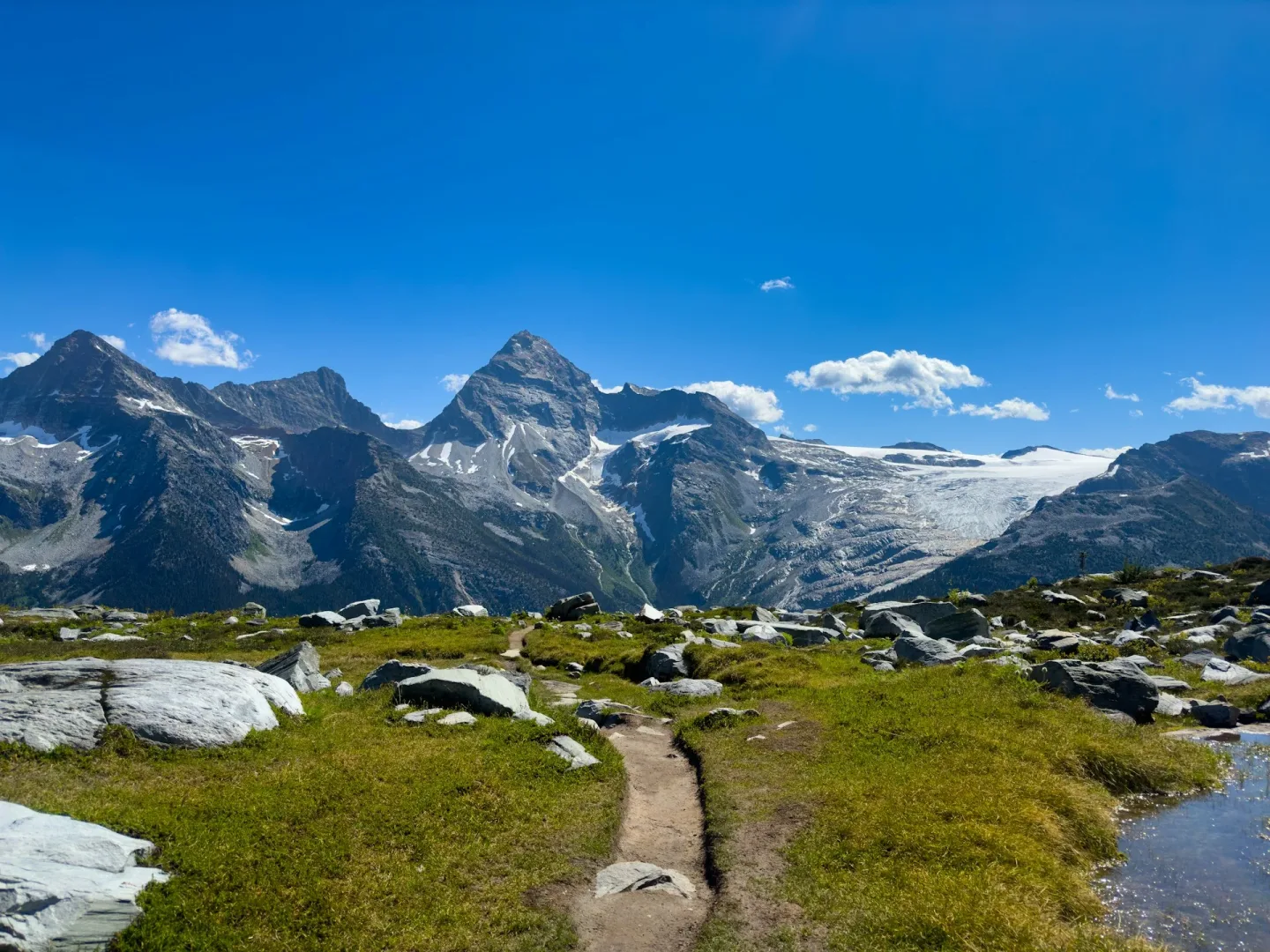
The Highline Trail to Granite Park Chalet earns the top spot because it delivers uninterrupted world-class scenery for nearly the entire length of the hike. From the Logan Pass start to the historic Granite Park Chalet, the trail traverses the Garden Wall along the Continental Divide with views that span dozens of miles in every direction.
The chalet itself, a stone backcountry hut built in 1915 and still operated today, adds a historic destination that makes the hike feel like a genuine journey rather than just a walk. From the chalet, a spur trail leads to the Grinnell Glacier overlook. Then the trail descends through switchbacks to The Loop on the Going-to-the-Sun Road.
Why It Earns the Top Ranking
No other hiking trail in Glacier National Park combines this level of sustained, panoramic scenery with a clear narrative arc: start at the highest road point, traverse the most dramatic ridge in the park, reach a historic mountain destination, and descend to the valley. It's the complete Glacier experience in a single day.
Who This Hike Is Best For: Fit and experienced day hikers who are comfortable with exposure and long mileage on variable terrain.
Pro Tip: This is a one-way shuttle hike. Drop a car at The Loop trailhead the night before, or take the park shuttle back from The Loop to Logan Pass after finishing. Start no later than 8:00 AM to ensure you're not descending into afternoon thunderstorms.
The Bottom Line: Why Glacier National Park Hiking Is Worth Every Step
Glacier National Park offers the most dramatic wilderness hiking experience available in the contiguous United States, and the 10 trails on this list represent the full range of what that means, from a flat 45-minute boardwalk walk to an 11-mile traverse of the Continental Divide.
The best approach is to match the trail to your current fitness and experience level, start early every single day, carry bear spray, and give yourself more days than you think you need. Glacier rewards repeat visitors, people who come back year after year and work their way deeper into the backcountry. But even a single trip, done well, can be one of the most memorable outdoor experiences of your life.
Don't wait too long. The glaciers are shrinking, the summers are getting shorter, and trails like the Highline and Grinnell Glacier are genuinely extraordinary right now.
Frequently Asked Questions
Are there easy hikes in Glacier National Park?
Yes, Glacier National Park has several excellent, easy hikes suitable for families, beginners, and casual visitors. The Hidden Lake Overlook Trail (2.7 miles, 540 feet gain) from Logan Pass is one of the most popular easy options, offering mountain goat sightings and panoramic alpine views. The Avalanche Lake Trail (4.5 miles, 500 feet gain) and the Virginia Falls Trail (3.8 miles, 450 feet gain) are also beginner-friendly with rewarding scenery.
Can dogs hike in Glacier National Park?
Dogs are allowed in Glacier National Park, but only in limited areas. They are permitted on paved roads, in frontcountry campgrounds, and picnic areas, but are not allowed on most trails, in the backcountry, or on park shuttle buses. This significantly limits hiking options for visitors traveling with pets. Always check current regulations before your trip.
What do you need to hike in Glacier National Park?
Essential gear includes bear spray (non-negotiable), 2–3 liters of water per person, layered clothing with a rain jacket, sturdy hiking shoes with ankle support, snacks or a full meal, a trail map or offline GPS app, and sun protection. For higher elevation hikes, bring an insulating layer even in summer due to sudden temperature drops and weather changes.
When do most Glacier National Park hiking trails become snow-free?
Lower elevation trails like Avalanche Lake and Virginia Falls are usually snow-free by mid-June. Most mid-elevation trails open between late June and mid-July depending on snowfall. High routes such as Siyeh Pass, Ptarmigan Tunnel, and Grinnell Glacier often remain snow-covered until mid-July or later. The National Park Service provides real-time trail conditions on its official website.
Can I hike Glacier National Park trails without a shuttle reservation?
Yes, but access to popular trailheads like Logan Pass often requires early arrival before 8:00 AM or using the free park shuttle. The shuttle operates on a first-come, first-served basis. Point-to-point hikes such as the Highline Trail or Siyeh Pass may require arranging transportation or using shuttle combinations. Some boat-based access routes, like those in Many Glacier, can be booked in advance.