Hiking is one of the most accessible and genuinely rewarding forms of physical activity out there. It builds cardiovascular fitness, strengthens the lower body, and does things for mental health that a gym session rarely can. But trails present real physical risks, and a surprising number of hikers find that out the hard way every season.
Most hiking injuries are not freak accidents. They happen because of terrain that was underestimated, gear that did not fit, preparation that was skipped, or fatigue that built up faster than expected.
Even experienced hikers run into common injuries in hiking when one of those factors slips through. The good news is that understanding which injuries occur most often, and why, puts you in a strong position to prevent them before they start.
Why Hiking Injuries Happen More Than People Expect
Hiking looks low-risk compared to sports like mountain biking or trail running, and that perception is part of the problem. People head out in unsuitable footwear, skip warm-ups, carry too much weight, or push past fatigue because the activity does not feel intense enough to warrant serious preparation.
The numbers tell a different story. A systematic review published in PLOS ONE covering over 17,000 injured hikers found that the most common injuries were blisters and ankle sprains, with blisters accounting for 8 to 33% of all reported hiking injuries across studies. Lower limb injuries dominated in every single study reviewed.
Research on long-distance Appalachian Trail hikers found that 61% reported musculoskeletal complaints, and those who did no pre-hike training were nearly three times more likely to get injured than those who prepared properly.
Terrain, weather, pack weight, and physical conditioning all interact. A hiker who is well-prepared handles the same trail in a very different shape than one who is not.
The 5 Most Common Hiking Injuries and How to Prevent Each One
Knowing which hiking injuries show up most frequently gives you a practical checklist to work through before any trail. Each one below comes with real causes and specific prevention strategies, not just generic advice to "be careful."
#1: Sprained Ankles
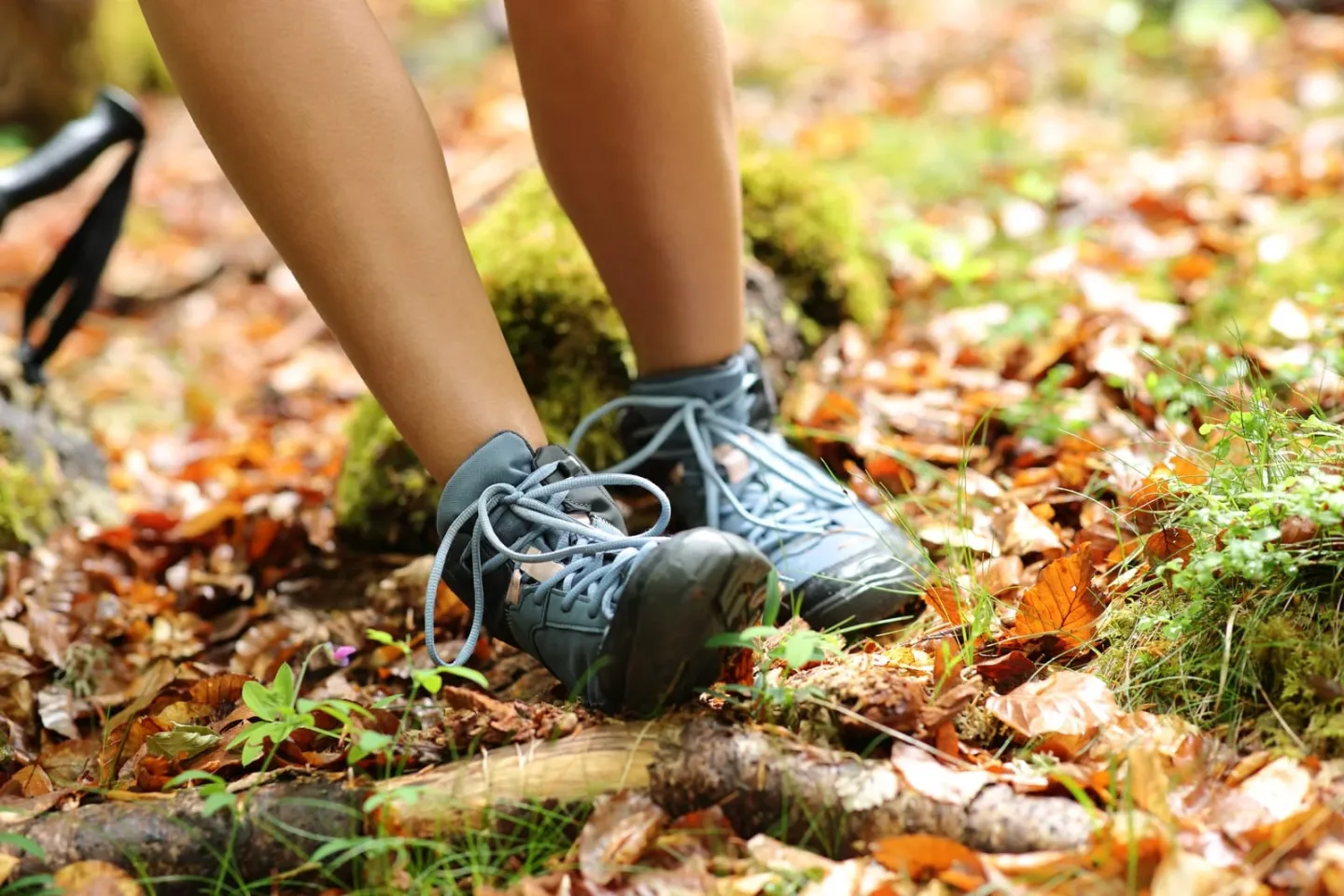
Ankle sprains are the single most frequent acute hiking injury. A study on mountain hiking accidents found that the ankle joint was the most common injury location, accounting for 42.4% of fall-related injuries among the 405 hikers surveyed.
The mechanics are straightforward: uneven terrain causes the foot to roll outward, the ligaments on the outside of the ankle take the load, and if they take too much load too fast, they tear partially or fully. Rocky descents, loose gravel, and rooted trails are all high-risk surfaces. Fatigue compounds the risk because tired muscles react more slowly to sudden terrain changes.
How to prevent ankle sprains on the trail:
- Wear footwear with ankle support and a grippy, lugged sole suited to your trail type. Trail runners are fine on groomed paths; technical or rocky terrain warrants a mid or high-cut hiking boot.
- Strengthen your ankles before longer hikes. Single-leg balance work, calf raises, and resistance band exercises all improve the stability that catches a roll before it becomes a sprain.
- Slow down on descents. Most ankle injuries happen going downhill, where speed and gravity work against control.
- Use trekking poles. Research consistently shows that poles reduce the risk of lower limb injuries by distributing load and improving balance on uneven ground.
Note: If you do roll an ankle on the trail, follow the RICE protocol (rest, ice, compression, elevation) as soon as possible and assess whether continuing is safe. Pushing through a moderate sprain often turns it into a severe one.
#2: Blisters
Blisters may not sound serious, but they are consistently the most reported medical complaint among long-distance hikers. A prospective study following 334 Appalachian Trail hikers found that 64% reported foot blisters, making it the single most common complaint across the group.
They form when friction between skin and sock, or sock and shoe, generates enough heat to separate the layers of skin. Moisture accelerates the process significantly. Ill-fitting shoes, cotton socks, and long descents are the main culprits. A blister that forms on day one of a multi-day hike will affect every mile that follows.
How to keep blisters off your feet:
- Break in new boots thoroughly before any significant mileage. Blisters from stiff new footwear are almost entirely avoidable.
- Wear moisture-wicking socks made from merino wool or synthetic blends. Cotton holds moisture and dramatically increases friction.
- Use blister prevention tape or bodyglide on areas that have caused problems before, particularly the heel and the ball of the foot.
- Keep feet as dry as possible. Change into dry socks at rest stops on wet days and treat hot spots (areas of warmth or mild irritation) before they develop into full blisters.
#3: Knee Pain
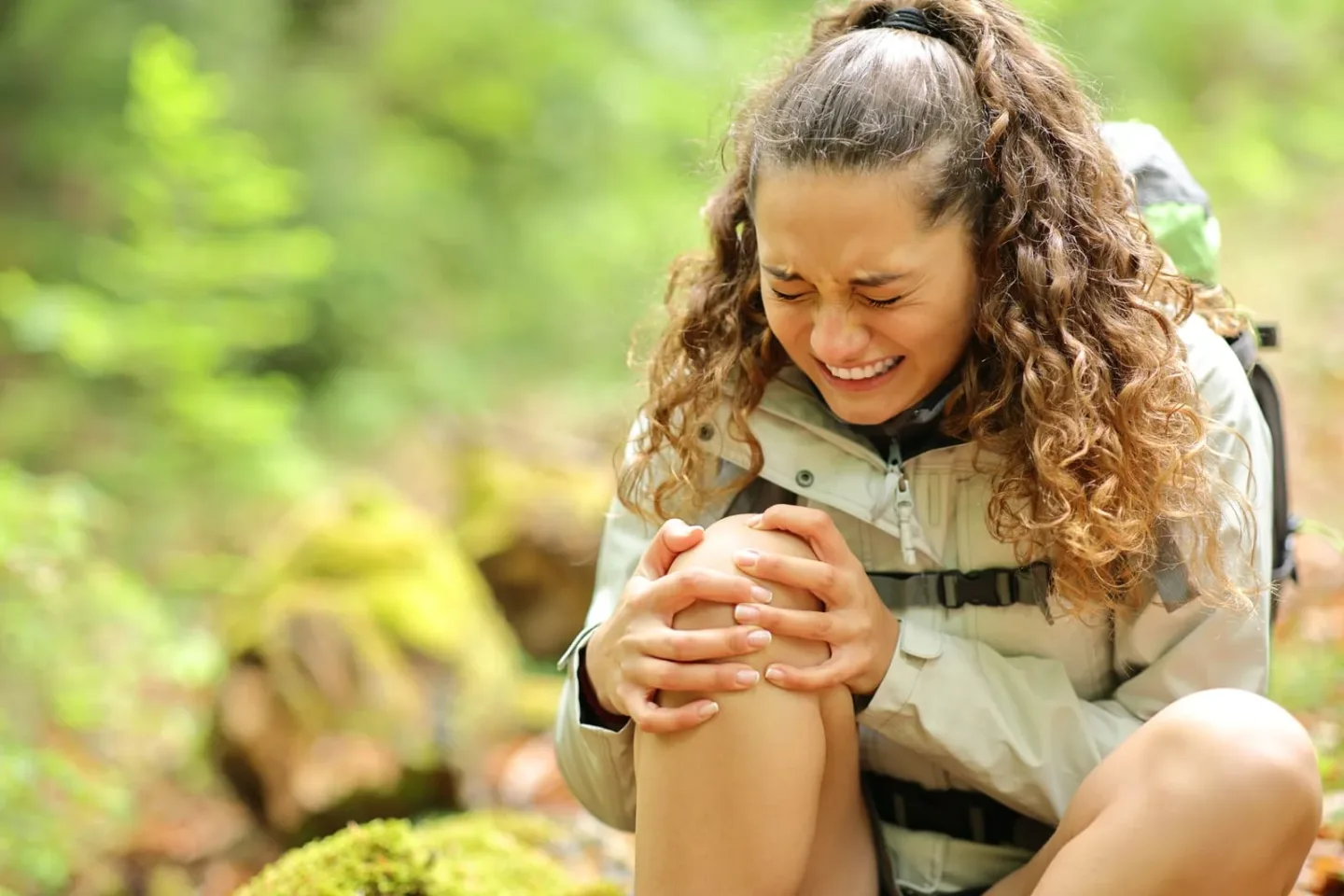
Knee pain is among the most common injuries in hiking, particularly on long descents where the knee absorbs repeated impact under load. The patellofemoral joint (the kneecap and the femur beneath it) takes significant compression with every downhill step, especially when carrying a heavy pack or moving at speed.
Overuse is a major factor. Hikers who push long mileage without adequate conditioning or recovery time develop knee pain that compounds over the course of a trip. Poor technique on downhills, including locking the knee straight on impact, adds to the stress.
Practical prevention strategies for knee pain:
- Use trekking poles on descents. Studies show that poles reduce the compressive force on the knee by a meaningful amount on downhill terrain, which adds up significantly over thousands of steps.
- Strengthen the muscles that support the knee before longer hikes. Quadriceps, hamstrings, and hip abductors all contribute to knee stability. Squats, lunges, and step-down exercises are particularly relevant.
- Shorten your stride on descents and bend the knee slightly on impact rather than landing with a straight leg.
- Keep pack weight reasonable. Research has shown that a higher backpack-to-body-weight ratio is associated with greater lower limb injury risk, and the knee is directly in that line of force.
#4: Heat Exhaustion and Dehydration
Heat-related illness is a serious and underestimated hiking injury risk, particularly on exposed summer routes, canyon hikes, and trails at lower elevations where shade is scarce. Heat exhaustion occurs when the body overheats and can no longer cool itself effectively through sweating alone.
Symptoms include heavy sweating, weakness, cold or pale skin, a fast and weak pulse, nausea, and fainting. Left unaddressed, heat exhaustion can progress to heat stroke, which is a medical emergency. The National Park Service notes specifically that hiking in extreme heat can lead to heat stroke, hyponatremia, and death, and advises against hiking exposed terrain during peak heat hours.
Dehydration and heat exhaustion are closely linked. When you lose fluid through sweat faster than you replace it, blood volume drops, your heart works harder, and your body temperature rises. On a warm day with significant exertion, this can happen faster than most people expect.
How to avoid heat exhaustion on the trail:
- Hike early in the morning or in the evening during the summer months. The NPS advises planning activity before 10 am and after 4 pm on hot days to avoid peak heat.
- Drink water consistently throughout the hike rather than waiting until you feel thirsty. Thirst is a late indicator of dehydration, not an early warning.
- Wear light-colored, breathable clothing that allows sweat to evaporate. Dark, dense fabrics retain heat.
- Take rest breaks in shade, especially in the middle of the day. Pushing through fatigue in heat is one of the fastest routes to heat exhaustion.
- Carry electrolyte supplements or salty snacks on longer hikes. Replacing sodium lost through sweat is as important as replacing water, particularly on hot days with high sweat output.
#5: Cuts, Scrapes, and Bruises
Minor skin injuries are the most frequently occurring hiking injuries by volume. Cuts from sharp rocks or branches, scrapes from trail falls, and bruises from stumbles happen on nearly every type of trail. Most are minor, but they carry infection risk, especially in remote areas where proper cleaning is harder.
The hands and lower legs are the most commonly affected areas. Falls on rocky terrain or loose gravel, brushing against thorny plants, and scrambling sections where hands are used all contribute.
Prevention and management:
- Wear long pants on technical, brushy, or rocky terrain. They reduce both the frequency and severity of skin injuries.
- Pay close attention to footing on loose surfaces, especially on descents, when fatigue affects coordination.
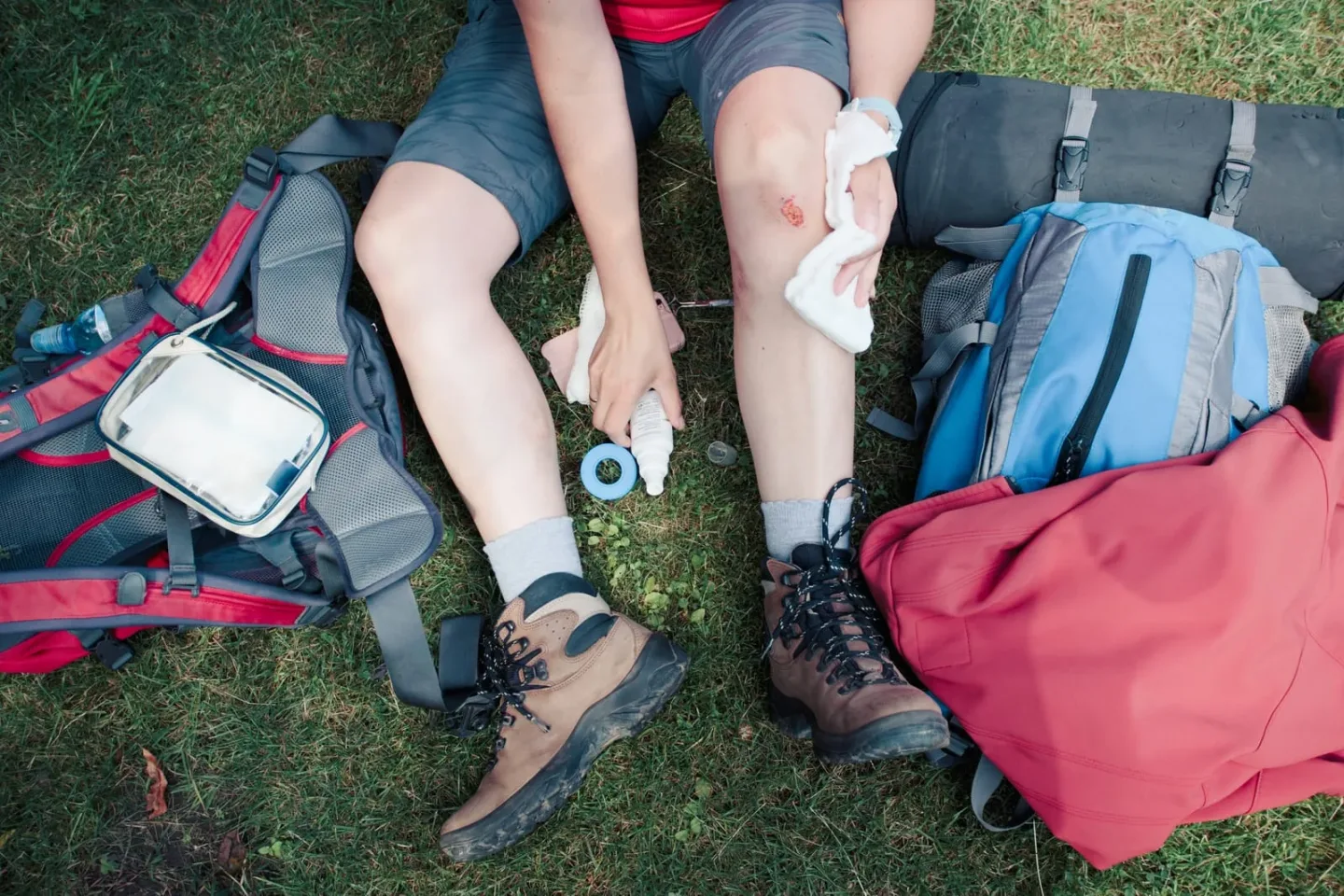
- Always carry a basic first aid kit that includes antiseptic wipes, adhesive bandages, gauze, and medical tape. Clean cuts promptly to prevent infection, particularly in warm, humid conditions where bacteria thrive.
- Gloves add meaningful protection on scrambling sections where hands contact rock regularly.
General Strategies for Preventing Hiking Injuries
A few habits cut injury risk across all five categories at once, regardless of trail type or experience level.
Warm Up and Train Before You Go
A 10-minute warm-up before a hike, including light walking, leg swings, and hip circles, prepares joints and muscles for the demands ahead. For multi-day or technically demanding trails, pre-hike conditioning matters significantly more.
Fatigue is a consistent factor in trail accidents: tired muscles respond slower, coordination drops, and judgment about terrain difficulty becomes less reliable. Plan routes that match your current fitness level, not your aspirational one.
Match Your Gear, Pace, and Attention to the Trail
Proper footwear for the terrain, weather-appropriate clothing, and a sensible pack weight all reduce the physical load your body carries over a long hike. Pacing matters too. Starting too fast creates the fatigue conditions where most hiking injuries happen.
A sustainable pace for the full route is always safer than a fast start followed by a difficult finish. And as obvious as it sounds, where your attention goes on technical terrain directly affects whether your foot lands well or badly.
Most Hiking Injuries Are Preventable
The five most common hiking injuries covered here, ankle sprains, blisters, knee pain, heat exhaustion, and cuts and scrapes, share a common thread: most of them are the result of factors that can be managed before the hike begins. Proper footwear, conditioning, hydration planning, pacing, and appropriate gear address the majority of risk across all five categories.
No preparation eliminates all risk on a trail. But hikers who prepare deliberately encounter injuries significantly less often than those who do not. Recognizing the most common hiking injuries for what they are, predictable and largely preventable problems, is the first step toward avoiding them.
Frequently Asked Questions
Do hiking boots prevent ankle injuries?
Boots with ankle support reduce the risk of sprains compared to low-cut shoes on uneven terrain, but they do not eliminate it. The ankle joint study found no statistically significant difference in injury rates based on shoe type alone, suggesting that ankle strength, terrain awareness, and fatigue management matter at least as much as footwear choice. Boots help most on technical, rocky, or loose terrain where the ankle is frequently challenged.
Can hiking hurt your back?
Yes, particularly from carrying a heavy or poorly fitted pack. A pack that sits too high, too low, or transfers load to the shoulders instead of the hips creates strain across the lower back and lumbar spine. Proper pack fitting, keeping pack weight at or below 20% of body weight, and strengthening the core before longer hikes all reduce back strain significantly.
How much water should I drink to avoid heat exhaustion while hiking?
There is no universal answer because sweat rate varies with temperature, effort level, and individual physiology. A general guideline is approximately 500ml (about half a liter) per hour of moderate hiking in warm conditions, adjusted upward for higher temperatures and greater exertion. The key is drinking consistently throughout the hike rather than in large amounts at once, and including electrolytes on hikes lasting more than 90 minutes.
How can I treat blisters while hiking to avoid further damage?
Clean the area with an antiseptic wipe. If the blister is intact, cover it with a moleskin or blister pad and leave it alone if possible. If it has burst, clean it carefully, apply antibiotic ointment, and cover with a bandage to protect against infection. Do not remove the skin over a burst blister as it acts as a natural protective layer. Adjust lacing or add padding to reduce friction on the affected area before continuing.
How can trekking poles reduce the risk of hiking injuries?
Poles distribute load across the upper body, reducing the force that concentrates in the knees and ankles on descents. They also improve balance on uneven surfaces, which directly reduces the risk of falls and ankle rolls.