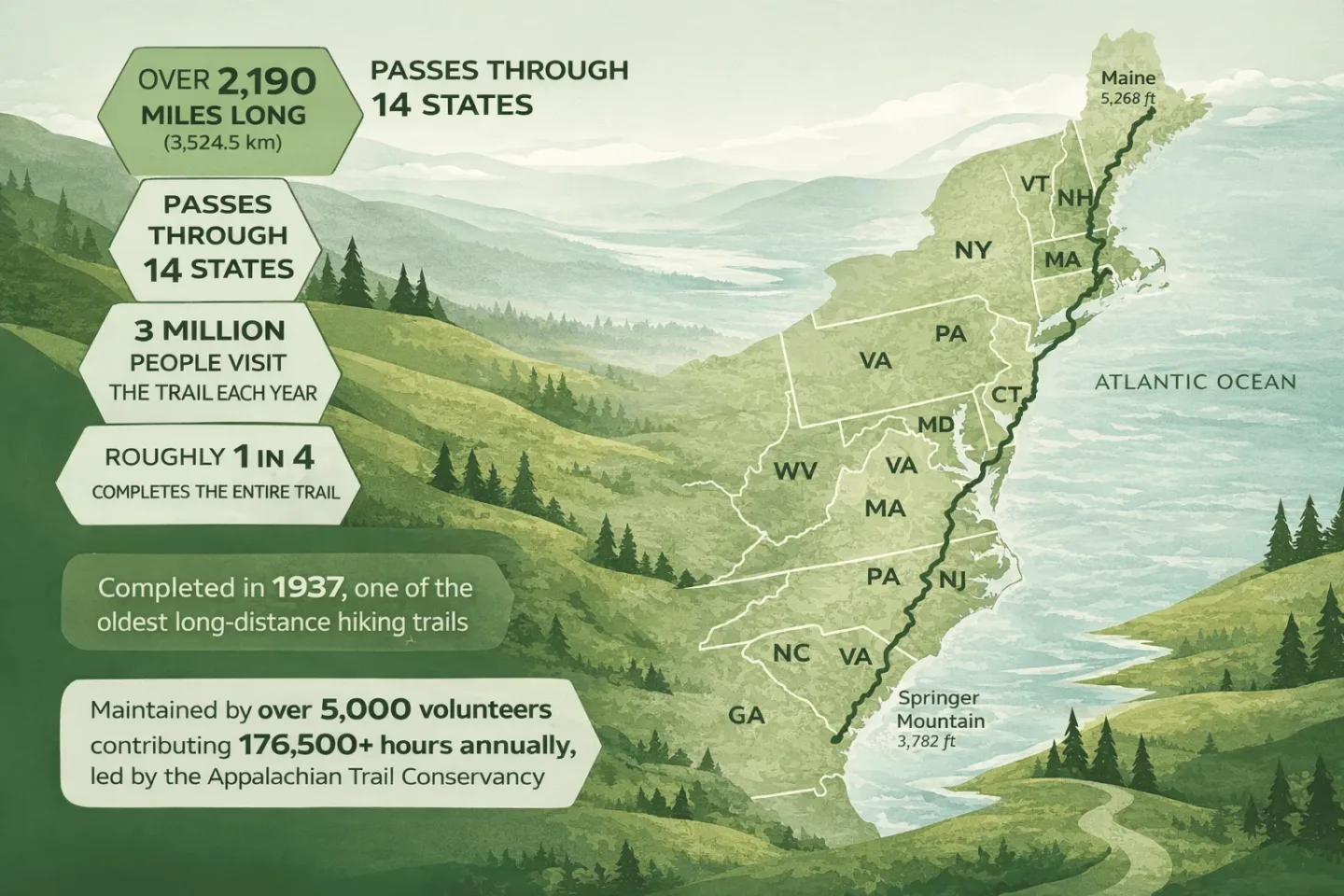
The Appalachian Trail is one of those things that sounds almost mythological until you start looking at the facts. Over 2,190 miles of continuous footpath running from Springer Mountain in Georgia to Mount Katahdin in Maine, passing through 14 states, connecting some of the most varied terrain in the eastern United States. More than 3 million people visit the trail every year. About 3,000 attempt to hike the whole thing in a single season. Roughly one in four of them makes it.
Hiking the Appalachian Trail demands far more preparation than most people initially expect, regardless of whether the goal is a weekend section, a multi-week stretch, or the full end-to-end thru-hike. Read on for a complete breakdown of what the trail is, how to prepare, what conditions await, and the planning decisions that separate successful completions from early exits.
What the Appalachian Trail Actually Is
Thru-Hiker's Pick
Best for going the distance on the world's most famous long trail
The Appalachian Trail demands gear that can survive 2,190 miles of abuse. These backpack and camping collections include AT-specific gear guides and let you filter by thru-hike suitability so every ounce in your pack earns its place.
- Oakley Shop hiking gear at Oakley
- Mountain Hardwear Shop hiking gear at Mountain Hardwear
- Columbia Sportswear Shop hiking gear at Columbia Sportswear
- Sorel Shop hiking gear at Sorel
- Garmin Shop hiking gear at Garmin
The Appalachian Trail was completed in 1937, making it one of the oldest long-distance hiking trails in the world. It sits within the National Park System, managed through a public-private partnership led by the Appalachian Trail Conservancy (ATC), a nonprofit founded in 1925 that coordinates over 5,000 volunteers contributing around 176,500 hours of trail maintenance annually.
The trail runs the full length of the Appalachian mountain range, touching Georgia, North Carolina, Tennessee, Virginia, West Virginia, Maryland, Pennsylvania, New Jersey, New York, Connecticut, Massachusetts, Vermont, New Hampshire, and Maine. Virginia hosts the most trail miles at around 550. West Virginia contributes the fewest at roughly 2.4 miles.
The AT draws hikers from well beyond the United States. In the 2025 northbound season, registered thru-hikers came from 25 countries, with international visitors identifying primarily as Canadian, German, and British, alongside the 93-plus percent who were U.S. residents.
How to Prepare for the Appalachian Trail Hike
Preparation for the Appalachian Trail covers four distinct areas. Each one matters, and neglecting any of them tends to show up somewhere on the trail.
Getting Physically Ready
The physical demands of hiking the Appalachian Trail are not distributed evenly across the route. Georgia and North Carolina open with significant elevation gain on rocky, rooted terrain. Pennsylvania grinds hikers down with miles of jagged rock. New Hampshire and Maine are widely considered the hardest states on the entire trail, combining steep climbs, technical terrain, and exposed ridgeline miles requiring full concentration in any weather.
Building a fitness base before the start date is not optional for most people. Effective preparation covers:
- Weighted pack hikes on varied terrain, with distance increasing over 8 to 12 weeks before the start
- Lower body strength work targeting quads, hamstrings, and ankle stabilisers
- Aerobic endurance training through running, cycling, or stair climbing to build a cardiovascular base
- Back-to-back long days of walking that simulate trail conditions better than any single long outing can
The 2025 ATC data put the average registered thru-hiker's pack weight at 30.4 lbs at the Georgia start. Reducing that number through smarter gear choices is as much a form of physical preparation as any training programme.
Preparing Mentally for a Long Haul
The physical side of a long Appalachian hiking trail experience gets most of the attention, but a significant share of hikers who quit do so for mental and emotional reasons rather than physical ones. Isolation, fatigue, the repetition of daily routine, extended time away from home, and consecutive days of bad weather accumulate in ways that fitness alone cannot prevent.
Setting honest expectations before the trail is more useful than arriving full of motivation. The trail has genuinely difficult stretches. Some days will cover far fewer miles than planned. Town stops will feel necessary and then hard to leave. Recognising these as predictable patterns rather than personal failures makes them considerably easier to manage.
Gear for the Appalachian Trail Hike
Gear selection rewards careful research. Ultralight principles apply throughout: unnecessary weight compounds across thousands of miles in a way that becomes physically significant over a five to six-month hike.
| Gear Category | What to Prioritise |
| Pack | 50-65L for thru-hike; fit matters more than brand |
| Shelter | Lightweight tent or tarp; hammock viable in forested sections |
| Sleep system | Quilt or sleeping bag rated to 20°F for most of the route |
| Footwear | Trail runners preferred by most current thru-hikers for weight and drying speed |
| Rain gear | Waterproof shell jacket and pack cover; non-negotiable on this trail |
| Cooking | Canister stove or alcohol stove; some experienced hikers go stoveless |
| Water treatment | Sawyer Squeeze filter or equivalent, with chemical backup |
| Navigation | ATC official maps plus the FarOut app loaded offline on a phone |
Permits and Regulations to Know Before You Go
Most of the Appalachian Trail requires no permit for through travel, but two sections are notable exceptions. Baxter State Park in Maine has strict entry requirements and limits daily access for thru-hikers finishing northbound in late summer and fall. Great Smoky Mountains National Park requires a backcountry permit for overnight stays and mandates designated shelter and campsite reservations throughout the section.
Thru-hikers can voluntarily register with the ATC through ATCamp.org, which helps the organisation manage crowding, particularly during high-traffic spring start windows in Georgia.
Terrain, Weather, and Wildlife on the Appalachian Trail
What the Trail Looks and Feels Like
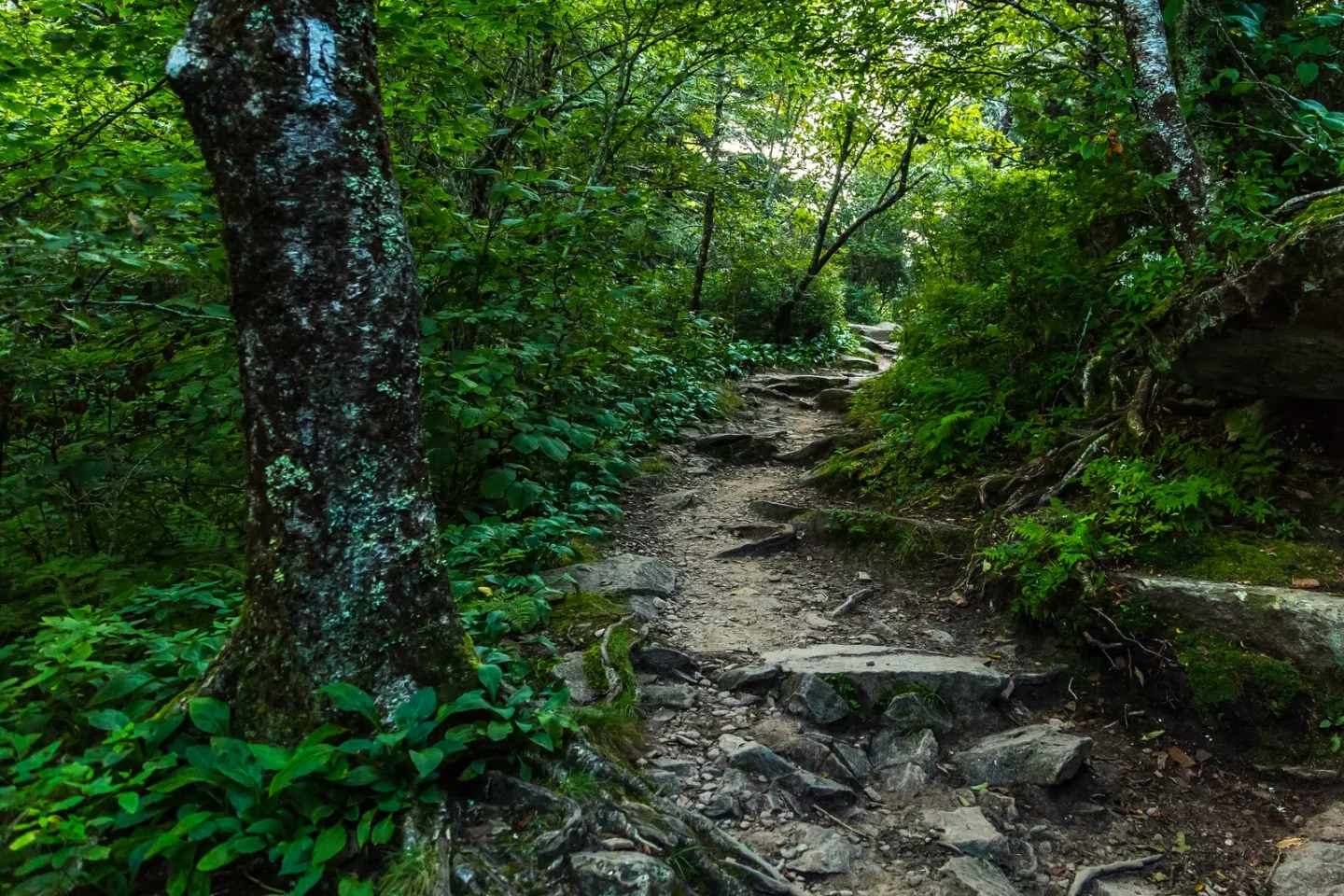
The Appalachian Trail passes through genuinely varied terrain across its 2,190-plus miles. Georgia and North Carolina deliver dense forest and ridge walking. The mid-Atlantic states include flatter sections through farmland and suburban fringe, broken up by Pennsylvania's notorious rocky stretches.
New England brings the most technically demanding terrain on the entire route, with the Presidential Range in New Hampshire and the Bigelow Range in Maine consistently rating as the toughest days for northbound hikers.
Weather shifts as dramatically as the terrain. Starting in Georgia in late winter means cold nights and occasional highland snow. A northbound hiker reaching Maine in autumn faces sharply dropping temperatures and potential early snow on Katahdin.
Afternoon thunderstorms roll through Virginia and the mid-Atlantic throughout the summer. A week of sustained rain in the White Mountains is a different experience from anything in the southern states. Proper waterproof gear is non-negotiable at every stage.
Bears, Wildlife, and Shelters
Black bears live along much of the Appalachian hiking trail, with the highest densities in the Smoky Mountains, Shenandoah, and the New Jersey and New York sections. Proper food storage is both a legal requirement and a practical necessity in these areas. Bear canisters or certified hanging techniques are required in most sections, and bear boxes are available at many high-impact shelters.
The AT has over 260 three-sided lean-to shelters spaced roughly a day's walk apart for most of the route. They are free on a first-come, first-served basis and typically sit near a water source. Shelters concentrate trail community, which is genuinely valuable but comes at the cost of solitude. Camping away from shelters is permitted in most sections under Leave No Trace principles, though some high-impact areas require designated sites only.
Planning an Appalachian Trail Hike That Actually Works
Quick overview





Thru-Hike or Section Hike: What Suits You Better
A thru-hike completes all 2,190-plus miles within a 12-month window, usually as a single continuous northbound walk starting in Georgia from late February through April. Section hiking covers the same total distance across multiple trips over multiple years, allowing the trail to fit around work, family, and other commitments. The ATC's 2,000-miler recognition applies equally to both methods.
Section hikers skew older, with a median age of 40, and some take years or decades to complete the full trail. Many report the section approach as ultimately more enjoyable because it removes the time pressure that shapes every decision on a thru-hike.
Timing, Resupply, and Trail Towns
Most northbound thru-hikers start between late February and early April, targeting a Katahdin summit before Baxter State Park closes in mid-October. Starting too early brings cold and snow in the southern highlands. Starting too late creates a real risk of running out of season before Maine.
Resupply combines mail drops sent ahead to post offices and outfitter stores in trail towns, with direct food purchases in towns along the route. Established resupply stops include Damascus in Virginia, Hanover in New Hampshire, and Millinocket in Maine. Most sections require carrying four to seven days of food between resupply points. Some remote stretches in Maine demand carrying more.
- Practical note: A spreadsheet tracking planned resupply towns, mileage between them, and post office hours saves significant stress once on trail. Build it before departure.
The Hardest Parts of Hiking the Appalachian Trail
Where the Physical Difficulty Concentrates
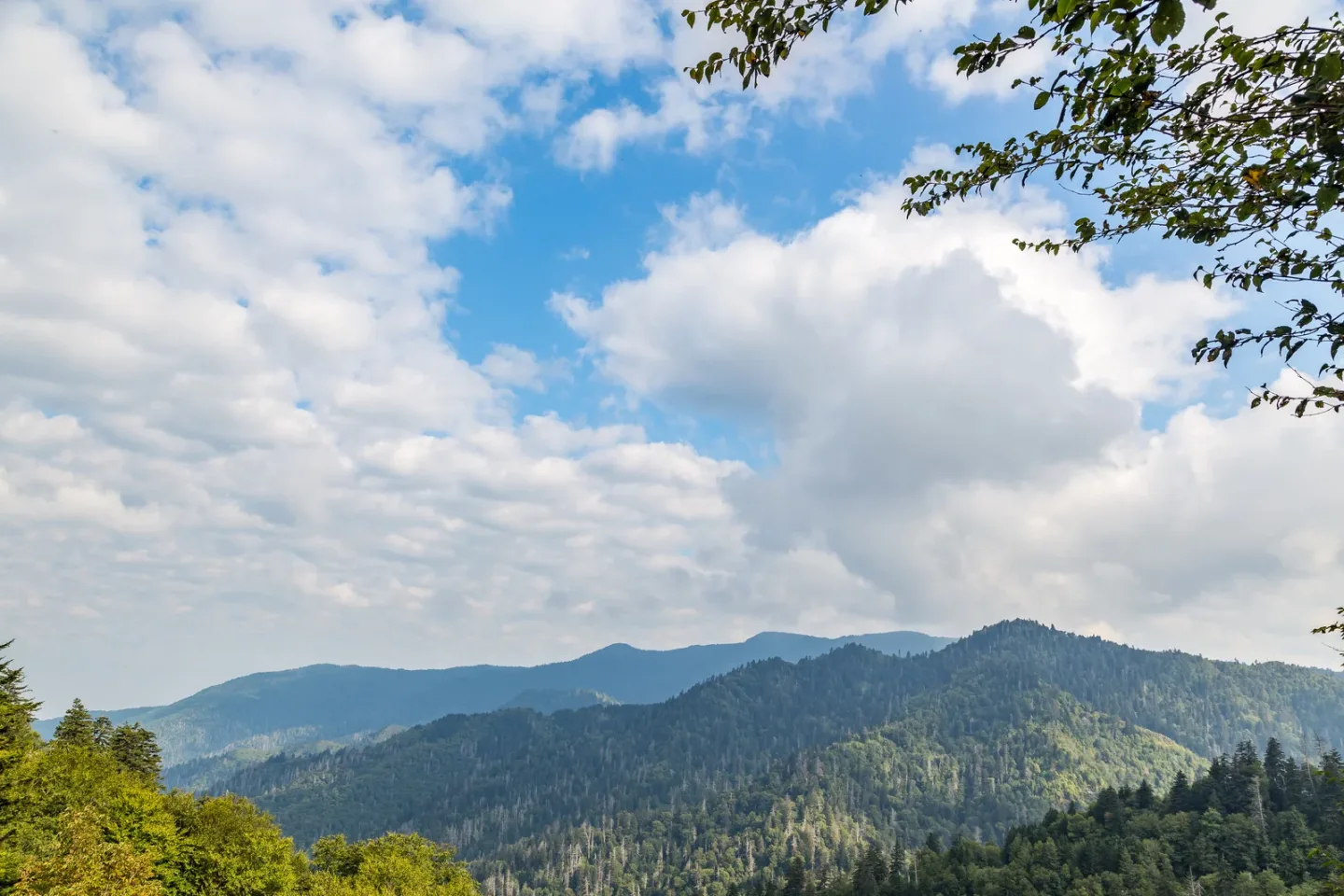
Physical difficulty on the Appalachian Trail hike clusters in specific locations rather than spreading evenly across the route. The first hundred miles in Georgia, Pennsylvania's rock fields, the White Mountains, and the 100-Mile Wilderness in Maine are where most hikers encounter their worst days. Cumulative fatigue amplifies these sections: terrain that feels manageable in month one is significantly harder when the body carries weeks of accumulated mileage.
Navigation across most of the AT is uncomplicated. White blazes mark the trail on trees and rocks throughout its length, and the FarOut app provides GPS guidance with real-time condition notes from other hikers. Serious navigation challenges arise mainly in severe weather with low ridge visibility, after storm damage that temporarily disrupts blazing, and in the 100-Mile Wilderness, where the trail is genuinely remote.
The Mental Side of a Months-Long Hike
Mental difficulty on a long Appalachian hiking trail experience follows a recognisable pattern. Isolation hits hardest in the opening weeks before a trail community forms around northbound hikers in the same start window.
Weeks four through eight see the highest dropout rates as early motivation fades and the reality of daily mileage settles in. New Hampshire and Maine, arriving at the end of five to six months of accumulated effort, are as mentally demanding as they are physically.
The factors that keep hikers moving share common traits:
- A personal reason for finishing that goes deeper than novelty or social pressure
- Flexibility about daily mileage targets on tough weather and terrain days
- Willingness to take genuine rest in trail towns when the body signals it needs recovery
- The community that forms naturally among hikers sharing the same start window and direction
The Appalachian Trail Is Worth Every Mile of Preparation
The 20,000th recorded trail completion was logged in 2018, 81 years after the trail was first completed in 1937. Completions grow year on year, and the range of people who finish spans from teenagers to hikers in their eighties.
The hikers who do best are rarely the ones who arrive the fittest. They are the ones who prepared honestly, packed with discipline, set realistic expectations about difficulty, and stayed flexible when the trail did not match the plan. Those qualities carry further on a trail this long than any amount of cardiovascular fitness.
Frequently Asked Questions
What is the best time of year to hike the Appalachian Trail?
For a northbound thru-hike, late February through early April for the Georgia start, targeting Katahdin before mid-October. For section hiking, spring and fall suit the mid-Atlantic and southern sections best, while summer is the only practical window for New Hampshire and Maine. The White Mountains in early spring are unstable and genuinely dangerous.
How long does it take to complete an Appalachian Trail hike?
A thru-hike averages five to six months. Daily mileage typically builds from 8 to 10 miles early on to 15 to 20 miles by mid-trail as fitness develops. Section hikers take anywhere from a few years to several decades, depending on available time.
Is the Appalachian Trail safe?
Real hazards exist: lightning, hypothermia, heat exhaustion, wildlife encounters, water crossings, and technical terrain all require preparation. The most effective safety practice is straightforward: carry appropriate gear, know the terrain ahead, and always leave a detailed itinerary with someone before starting any remote section.
Are dogs allowed on the Appalachian Trail?
Dogs are permitted on most of the trail but prohibited in Great Smoky Mountains National Park and Baxter State Park. Both are significant sections requiring workarounds for hikers with dogs. Dogs must be leashed in all national park sections.
How much does it cost to hike the Appalachian Trail?
A full thru-hike typically runs between $3,000 and $6,000 for the five to six month duration, depending on resupply strategy, town stop frequency, and gear choices. Pre-trail gear investment adds to this for first-timers. The trail carries no entry fee for most of its length, though Baxter State Park charges a day-use fee for Katahdin access.