Pick the wrong outfit for a hike, and you'll know about it fast. Too much cotton on a rainy day and you're soaked through within an hour. Not enough insulation on a cold ridge, and a great view becomes something you're too cold to enjoy. The right hiking clothes won't just keep you comfortable; they can genuinely keep you safe when conditions turn.
This article breaks down hiking clothing by season and weather conditions, starting with the basics every hiker needs to understand, then moving into specific gear for warm, cold, and wet trails. There's also a section on how to shop smarter, plus answers to the questions hikers ask most.
Layers: The Logic Behind Hiking Clothing
Most people who are new to hiking think of clothing as static; you pick an outfit and wear it. Experienced hikers think of it as a system they adjust throughout the day. That system is built on three layers, each with a specific job.
All-Season Hiker's Pick
Best for dressing right no matter the forecast
This camping & hiking collection organizes apparel by layer type — base, mid, and shell — across every season, making it easy to build a complete wardrobe from a single trusted source without gaps or redundancies.
- Oakley Shop all-season hiking wardrobe at Oakley
- Mountain Hardwear Shop all-season hiking wardrobe at Mountain Hardwear
- Columbia Sportswear Shop all-season hiking wardrobe at Columbia Sportswear
- Sorel Shop all-season hiking wardrobe at Sorel
- Garmin Shop all-season hiking wardrobe at Garmin
- Base layer sits against your skin. Its only job is moisture management: pulling sweat away from your body and allowing it to evaporate before it chills you. Merino wool and polyester blends do this well. Cotton does the opposite; it absorbs moisture and holds it, which is why it has no place in a serious hiking wardrobe.
- Mid layer is your insulation. This is the warmth you add or remove depending on your effort level and the temperature. Fleece and down are the most common options. You'll pull this off on a hard climb and put it back on when you stop for lunch.
- The outer layer is the shell, your defense against wind and rain. A good shell doesn't need to be warm by itself. It just needs to block the weather while still letting moisture vapor escape outward; you'll be soaked from the inside out.
These three layers work as a team. The combinations change with every season, but the principle stays the same.
Warm Weather Hiking Clothes: What to Wear When It's Hot
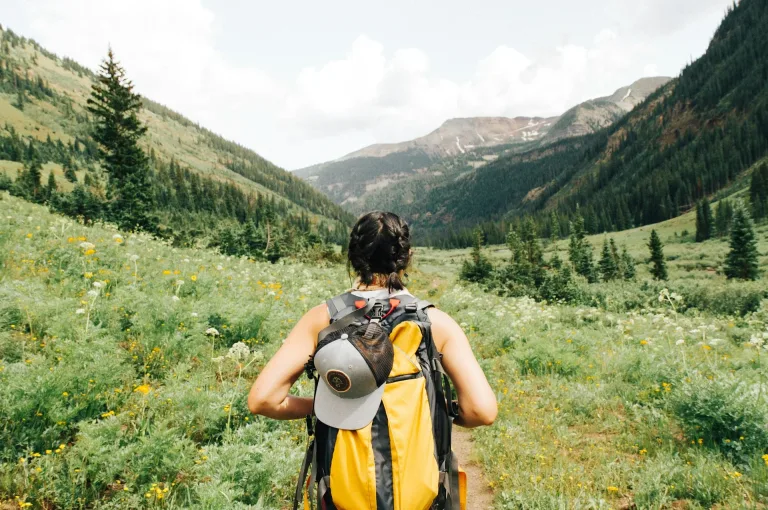
Summer hiking is physically demanding in a different way than cold-weather hiking. The risk isn't hypothermia, it's overheating, dehydration, and sunburn. Your clothing needs to keep you cool, dry, and protected from UV exposure all at once.
Base and Top: Staying Cool Without Cooking
Moisture-wicking shirts are the starting point for any warm-weather hiking outfit. They move sweat away from your skin fast enough that you don't feel constantly damp, which makes a real difference on long, hot climbs.
Merino wool works surprisingly well in heat. It's breathable, naturally odor-resistant, and soft enough to wear all day. Synthetic polyester blends dry faster and tend to cost less, making them a solid choice, too. Either way, look for a fabric weight of 150g or lighter for summer use.
Sun protection matters more than most hikers expect. Technical hiking shirts rated UPF 30 or higher block a meaningful amount of UV radiation. Long-sleeved options offer better coverage without necessarily being hotter; breathable fabrics with mesh panels can feel cooler than a short-sleeved shirt in direct sun because they protect skin that would otherwise be burning.
Bottoms, Footwear, and Accessories
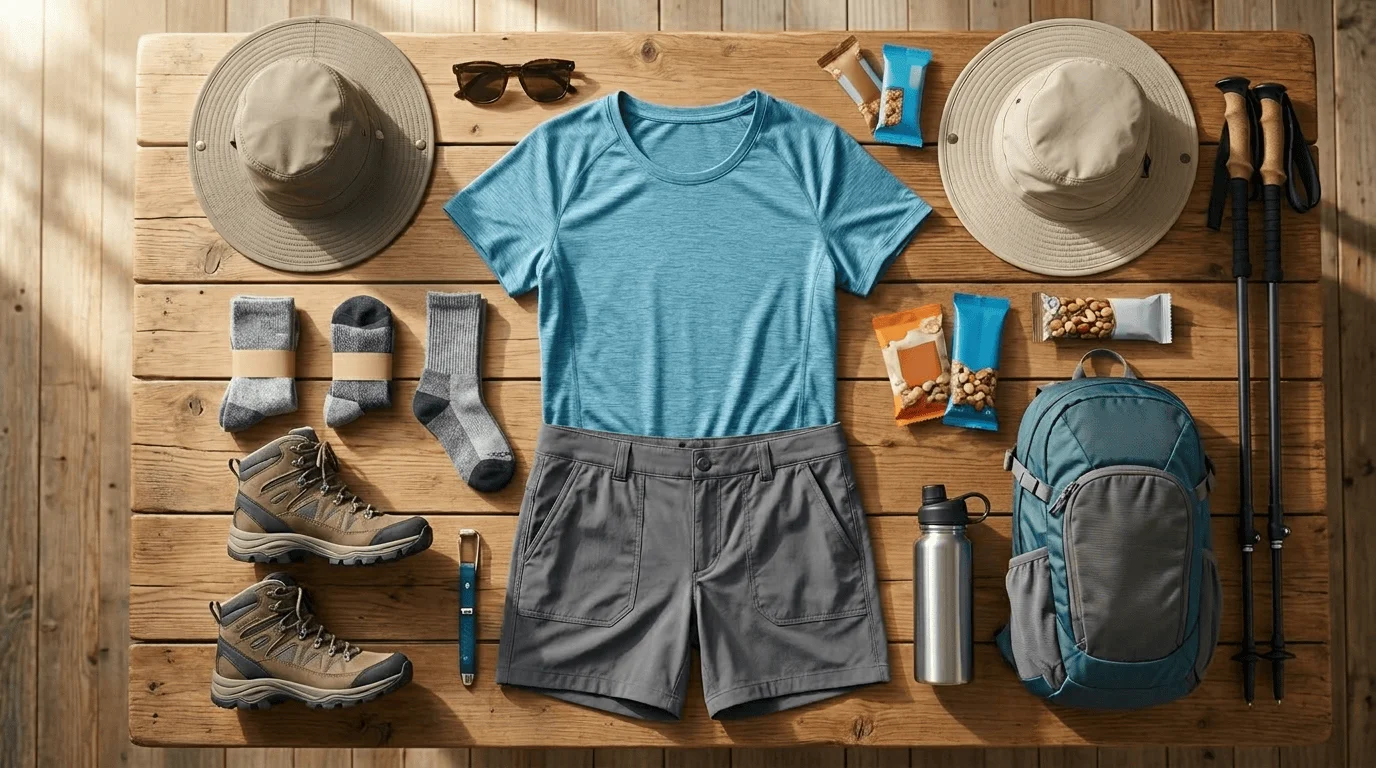
Nylon or polyester hiking pants and shorts are the go-to choice for warm conditions. They move with you, dry quickly, and hold up against trail abrasion. Convertible pants with zip-off legs are genuinely useful for hikes where morning temperatures are cool but afternoons heat up fast.
For footwear in warm, dry conditions, low-cut trail runners or lightweight hiking shoes beat heavy boots. They breathe better, weigh less, and their feet will thank you by mile eight. Pair them with merino or synthetic hiking socks, never cotton.
Warm-weather accessories worth carrying:
- Wide-brim hat: covers your face, neck, and ears, all areas sunscreen misses
- UV-blocking sunglasses: especially important at elevation or near water
- Buff or neck gaiter: doubles as sun protection and sweat management
- Sunscreen SPF 30 or higher: reapply every two hours regardless of cloud cover
Tip: Start summer hikes early in the morning. Trail temperatures between 6 am and 9 am are dramatically different from midday. Shifting your start time is one of the most effective ways to manage heat, and it costs nothing.
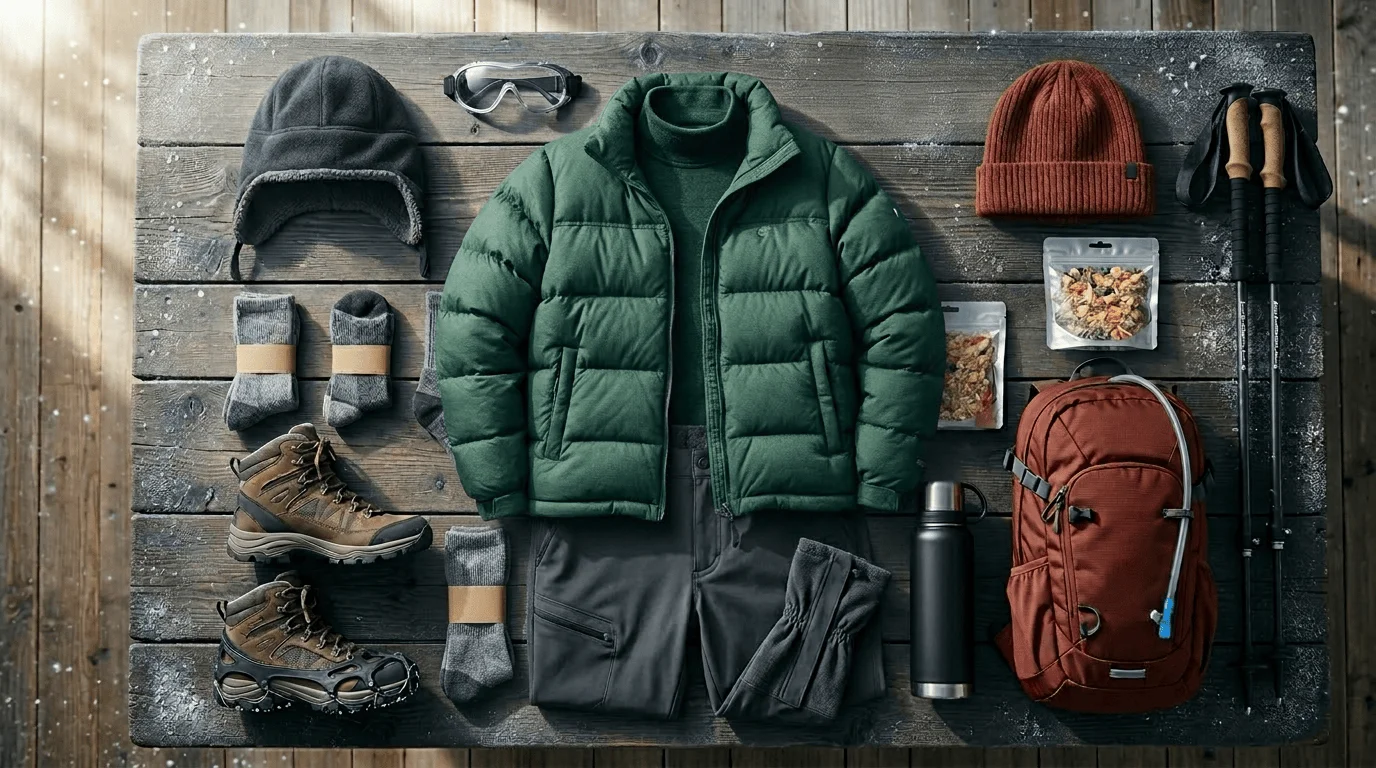
Cold Weather Hiking Clothes: Building Warmth That Lasts
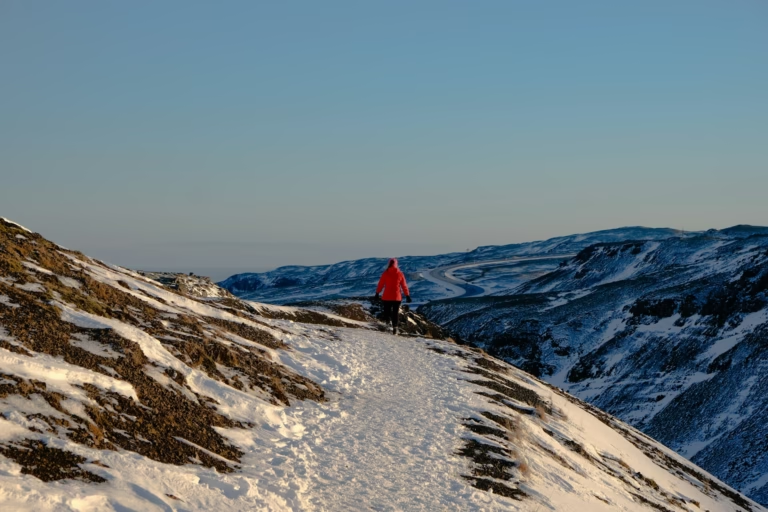
Cold-weather hiking gear requires more thought than warm-weather gear because the consequences of getting it wrong are more serious. Staying dry from sweat matters just as much as staying dry from rain; wet insulation loses most of its warming ability, which can make a strenuous hike turn dangerous fast.
The Base Layer in Cold Conditions
A midweight merino wool or synthetic base layer is the foundation for cold-weather hiking. Merino has a practical advantage here: it retains some warmth even when damp, which acts as a buffer in situations where you can't immediately change clothes. For very cold conditions, a heavyweight base layer adds insulation without requiring an extra mid-layer.
Mid Layer Options Compared
| Mid Layer Type | Warmth | Performance When Wet | Weight | Best For |
| Fleece | Good | Retains warmth when damp | Medium | Most cold hikes, wet climates |
| Down | Excellent | Loses warmth when wet | Light | Cold, dry conditions |
| Synthetic fill | Very good | Retains warmth when damp | Medium | Cold, unpredictable weather |
Fleece is the most versatile cold-weather mid-layer for hiking because it breathes well on uphills and doesn't collapse when rain finds its way in. Down is superior in dry, very cold conditions where weight matters. Synthetic fill splits the difference.
Outer Layer: Shells and Cold-Weather Pants
A waterproof, windproof shell is non-negotiable for cold-weather hiking. The technology to look for is a breathable waterproof membrane; Gore-Tex is the best-known, but other laminates from reputable brands perform well, too. A non-breathable waterproof jacket will keep rain out and trap sweat in, leaving you just as wet from the inside.
Cold-weather hiking pants should be wind-resistant at a minimum. Softshell pants offer a good balance: they stretch, block wind, and handle light rain without feeling like you're wearing a plastic bag.
Footwear and Extremity Protection
Insulated waterproof boots are standard for cold conditions. The insulation rating (measured in grams of fill) gives a rough guide: 200g works for cool autumn days, while 400g or more is appropriate for genuine winter hiking with time spent standing or stopping.
Cold-weather hiking accessories to prioritize:
- Merino or fleece beanie: the head loses heat disproportionately fast
- Liner gloves under insulated outer gloves: gives you dexterity when you need it, protection when you don't
- Heavyweight wool or synthetic hiking socks: the CDC's occupational cold stress guidelines note that layered, insulating socks outperform a single thick pair for both warmth and circulation (cdc.gov/niosh)
- Gaiters: worth carrying for deep snow or muddy trails that push debris into the top of your boot
Note: Leave the trailhead feeling slightly cool, not comfortable. You'll warm up within ten minutes on most hikes. If you start warm, you'll be overheating on the first uphill and tempted to shed layers you'll need later.
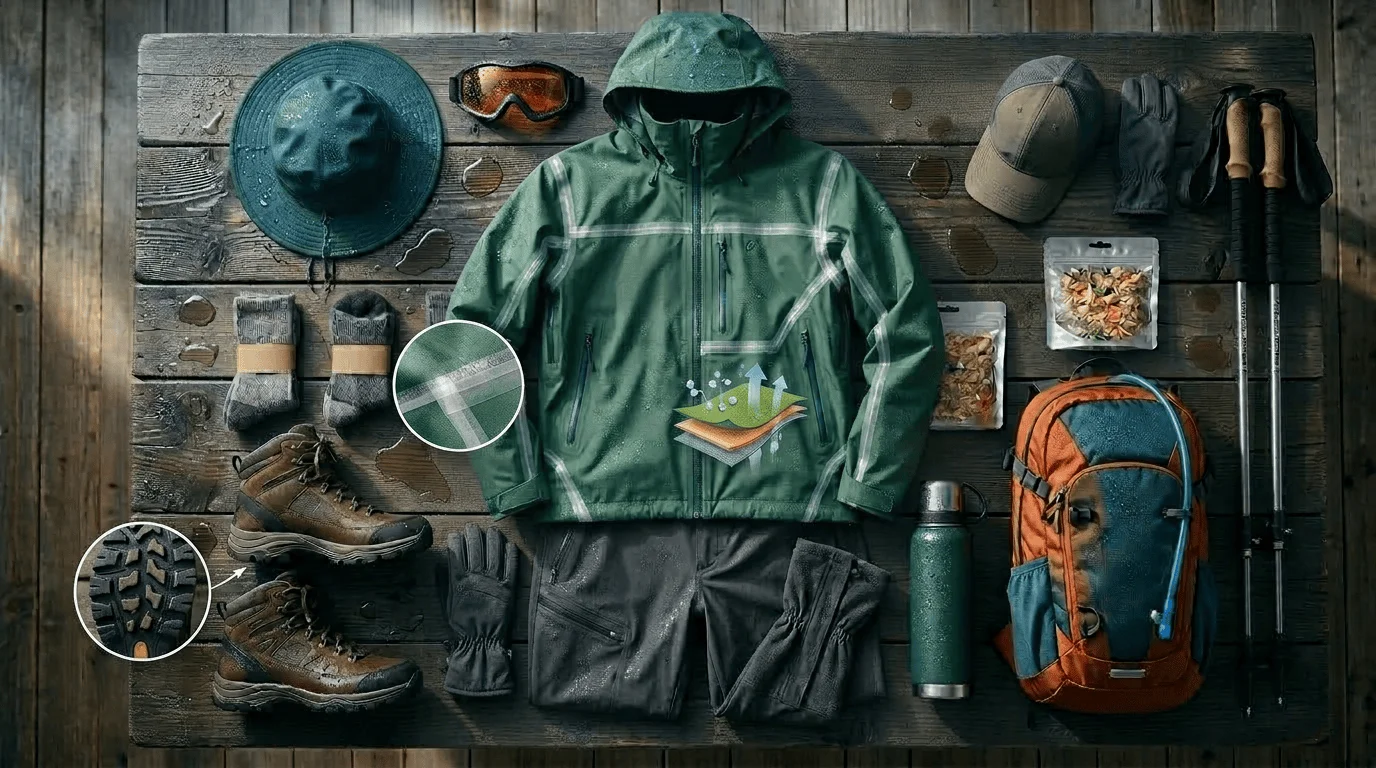
Wet Weather Hiking Clothes: Staying Dry Without Overheating
Rain hiking is where clothing choices have the most immediate consequences. Cold plus wet accelerates heat loss faster than either condition alone. Good wet-weather hiking clothing creates a system that keeps rain out while still allowing sweat to escape — a harder engineering challenge than it sounds.
The Waterproof Shell: What Actually Works
There's a meaningful difference between water-resistant and waterproof. Water-resistant finishes (DWR coatings alone) bead rain off in light showers but saturate in sustained downpours. A genuinely waterproof jacket uses a membrane layer bonded to the fabric that physically blocks water while allowing vapor to pass through.
Check for taped seams; the stitching holes in a jacket are where water gets in first, and fully taped seams seal them.
Waterproof pants are underrated. Most hikers carry a rain jacket and forget about their legs. Wet pants are cold, heavy, and chafe badly on descents. A lightweight pair of waterproof over-pants packs into a fist-sized stuff sack and changes a miserable rainy hike into a manageable one.
Layering for Rain
The wet-weather layering approach is almost identical to cold-weather layering, with one difference: down is a poor mid-layer choice unless it's specifically treated with a hydrophobic coating. Fleece is the safer option because it holds some insulating value even when damp.
A functional wet-weather layering setup looks like this:
- Base layer: midweight merino or moisture-wicking synthetic
- Mid layer: fleece pullover or zip, breathable, quick-drying
- Outer layer: waterproof shell jacket with taped seams and a DWR coating
- Legs: waterproof over-pants or softshell with rain over-pants on top
Footwear and Accessories for Wet Trails
Waterproof hiking boots with substantial lug soles handle most wet trail conditions well. The tread pattern matters more in mud and wet rock than on dry ground. Wider-spaced, deeper lugs clear mud rather than packing it in.
Waterproof gloves or shell mittens are a small addition that makes a big difference. Cold hands affect your grip, your decision-making, and your enjoyment of the day. A baseball cap worn under your hood keeps rain off your face in a way that a hood alone doesn't manage.
How to Choose Hiking Clothes That Actually Hold Up
Quick overview





Fabric, Fit, and Worth the Price
Technical hiking clothing covers an enormous price range. The most expensive option isn't always the best one for your needs, but a few pieces are worth spending more on: your base layer, your waterproof shell, and your footwear. These are the items that directly affect your comfort and safety in bad conditions.
When evaluating what clothes to wear for hiking, look beyond the marketing and check:
- Fabric weight (gsm for merino, denier for nylon/polyester)
- Seam construction: flat seams reduce friction and blistering on long hikes
- Waterproof ratings, if applicable (at least 10,000mm hydrostatic head for reliable rain protection)
- Breathability ratings on shell jackets (measured in MVTR: higher numbers mean more breathable)
For hiking clothes, what to wear depends partly on your own body's tendencies. Some people run consistently warm and rarely need a mid-layer until temperatures drop below freezing. Others need insulation from early autumn. There's no universal answer, which is why testing gear matters.
Test Before You Commit to a Long Route
The American Hiking Society recommends getting familiar with all your gear before taking it on remote or multi-day routes, specifically to catch problems before they become emergencies. That means:
- Break in boots on short local walks before any significant mileage.
- Wear new socks and base layers on day hikes to identify friction points.
- Test your waterproof shell in actual rain or at least under a hose before relying on it.
- Refresh DWR coatings after washing; most can be restored by tumble drying on low heat or using a spray-on DWR treatment.
- Test your full layering system together, not just individual pieces.
A base layer and shell that perform perfectly alone sometimes create a clingy, binding combination when layered, which you want to discover on a short local hike rather than on a multi-day route.
Picking the Right Hiking Clothes for the Trail Ahead
Putting together a functional hiking wardrobe comes down to understanding three things: what conditions you're heading into, how your body responds to those conditions, and how to build a layering system that lets you adapt as the day changes.
Hiking clothes don't need to be complicated or expensive to work well. A quality moisture-wicking base, a versatile mid-layer, and a solid waterproof shell cover the majority of what most hikers will encounter across all four seasons. Build from there based on where you actually hike.
The goal is to stop thinking about what you're wearing once you're on the trail. The right hiking clothing becomes invisible when it's working properly.
Frequently Asked Questions
Should I wear loose or tight clothes for hiking?
Fitted, not compressive. Base layers need skin contact to wick moisture properly, so too loose defeats the purpose. The mid and outer layers just need to allow a full range of movement—reaching overhead, stepping up, crouching—without pulling or binding. The practical test is to wear the full kit with a loaded pack before buying.
Should I wear cotton clothing while hiking?
Avoid it for anything beyond a short, dry, warm walk. Cotton absorbs moisture and holds it, making it cold, heavy, and slow to dry. In cold or wet conditions, it becomes a genuine risk factor. Stick to merino wool or synthetic fabrics purpose-built for hiking clothing.
How do I layer for winter hiking?
Midweight merino or synthetic base layer, fleece or synthetic-fill mid layer, waterproof windproof shell on top. Heavyweight wool socks, insulated waterproof boots, liner gloves under insulated outer gloves, and a merino beanie. Start the hike cooler than comfortable; you'll warm up fast once you're moving.
What fabric works best across all seasons?
Merino wool handles the widest range of conditions: it wicks moisture, stays warm when damp, resists odor, and works in both summer and winter. For outer layers, waterproof-breathable laminates (Gore-Tex and equivalents) are the standard across all weather. No single fabric covers everything, which is the whole argument for a layering system.
What color is best for hiking?
Bright colors (orange, yellow, hi-vis green) improve your visibility to other hikers and to search and rescue teams, which matters in remote terrain. Earth tones are better for wildlife observation. For tick-prone trails, the CDC specifically recommends light-colored clothing because ticks are easier to spot before they attach.