There's something primal about chasing waterfalls. Maybe it's the rush of white water thundering over rock, or the cool mist on your face after a hot climb, or simply the visual drama of thousands of gallons dropping into a pool below.
Whatever pulls you toward cascades, waterfall hikes deliver a payoff that few other trails can match. The effort becomes part of the reward when you finally hear that roar growing louder with each step.
This guide breaks down the best waterfall hikes across the United States, from easy strolls to challenging climbs. Each trail offers something different: some deliver jaw-dropping volume, others hide in slot canyons, and a few remain delightfully unknown.
Whether you're planning a weekend trip or building a waterfall bucket list, these hikes with waterfalls represent some of the most spectacular cascades worth lacing up your boots for.
Pacific Northwest Waterfall Hikes
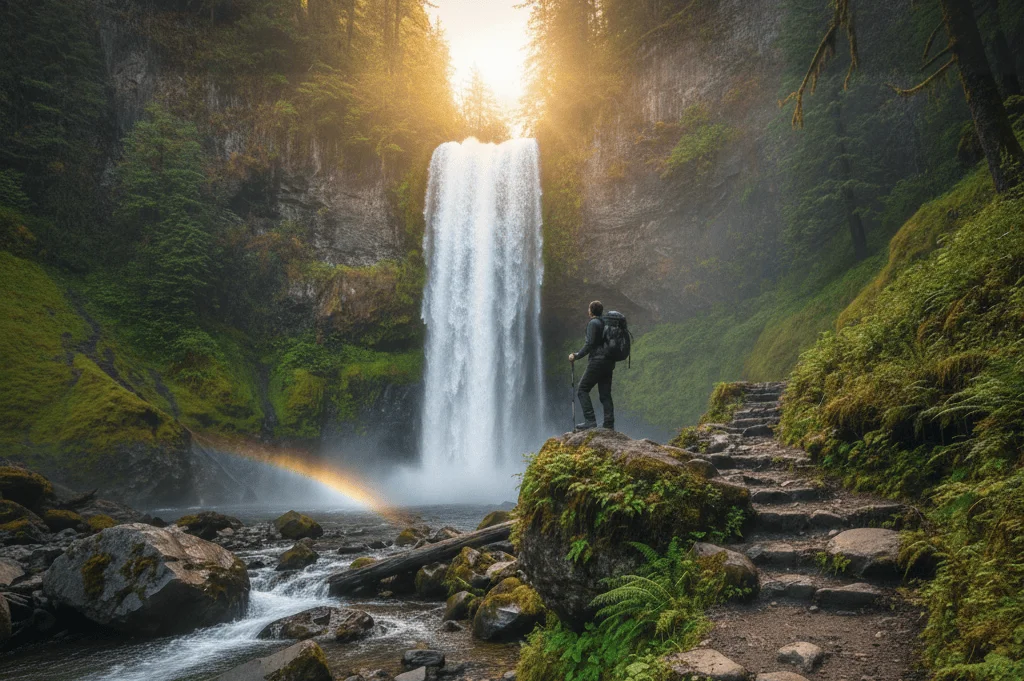
The Pacific Northwest practically drowns in waterfalls thanks to heavy rainfall and volcanic geology. Countless hikes with waterfalls exist here, but these three stand out for different reasons.
Waterfall Chaser's Pick
Best for trails with a spectacular payoff
Waterfall hikes often involve wet rocks, mist, and slippery approaches — traction and water resistance matter more than on a dry summit hike. This hiking collection includes waterproof trail shoes and quick-dry pants built for spray-zone scrambles.
- Oakley Shop hiking gear at Oakley
- Mountain Hardwear Shop hiking gear at Mountain Hardwear
- Columbia Sportswear Shop hiking gear at Columbia Sportswear
- Sorel Shop hiking gear at Sorel
- Garmin Shop hiking gear at Garmin
Trail #1: Proxy Falls — Oregon Cascades
Distance & Difficulty: 1.6-mile loop, easy
Location: Highway 242, McKenzie Pass
Proxy Falls splits into Upper and Lower Proxy Falls, both fed by underground springs that emerge from porous lava rock. The lower falls disappear into the same porous basalt it flows over, creating a vanishing act that feels almost magical. The trail loops through old lava flows and crosses a creek on log bridges before reaching viewing areas for both cascades.
The best waterfall hikes don't always require serious mileage, and Proxy Falls proves it. The trail stays relatively flat with just 200 feet of elevation gain, making it accessible for most fitness levels. Late spring through early summer offers peak flow, though the falls run year-round. Moss-covered rocks and filtered light through old-growth forest create excellent photo conditions even on overcast days.
Trail #2: Franklin Falls — Mount Rainier Corridor
Distance & Difficulty: 2 miles round trip, moderate
Location: Snoqualmie Pass area, I-90 corridor
This waterfall hike packs a serious visual punch for minimal effort. The 70-foot cascade drops into a rocky amphitheater, creating impressive mist clouds during peak runoff. The trail follows an old roadbed before narrowing into forest, crossing the South Fork Snoqualmie River on a sturdy bridge.
Winter transforms this into a completely different experience. The falls partially freeze, forming massive ice columns and frozen spray clinging to surrounding cliffs. Microspikes become essential gear from December through March, but the winter wonderland scenery makes the extra caution worthwhile.
Trail #3: Sol Duc Falls — Olympic National Park
Distance & Difficulty: 1.6 miles round trip, easy
Location: Sol Duc Hot Springs Road
Sol Duc Falls doesn't win height contests at just 48 feet, but the sheer power of water forcing through a narrow slot canyon creates an unforgettable spectacle. The Sol Duc River splits around a rocky island before converging again in a violent collision. A viewing bridge puts you directly above the action, where the roar drowns out conversation.
The trail meanders through old-growth rainforest with massive Douglas fir and western red cedar. Heavy rainfall in the Olympics keeps this waterfall impressive even during late summer when many Cascade waterfalls dwindle. The nearby Sol Duc Hot Springs Resort adds the option of soaking sore muscles after your hike.
California Waterfall Hikes
California's diverse geography creates waterfalls ranging from towering Yosemite giants to hidden desert oases.
Trail #4: Yosemite's Vernal & Nevada Falls (Mist Trail)
Distance & Difficulty: 5.4 miles round trip to Nevada Falls, strenuous
Location: Yosemite Valley
The Mist Trail ranks among the most famous waterfall hikes in America for good reason. Vernal Falls hits you first at 317 feet, where spray soaks the granite staircase leading to the top. Continue another 1.4 miles, and Nevada Falls appears at 594 feet, creating a two-cascade combo that justifies every steep step.
According to the National Park Service, Yosemite received over 4.1 million visitors in 2024, with the Mist Trail consistently ranking as one of the park's most popular routes. Expect crowds from May through September, especially on weekends.
Start early or hike on weekdays for the best experience. Spring runoff (April through June) provides maximum water volume but also means getting absolutely drenched on the Mist Trail section.
The granite steps can get slippery when wet, and the altitude (starting at 4,000 feet) affects some hikers. Bring rain gear, wear shoes with good traction, and pace yourself on the 2,000-foot elevation gain.
Trail #5: Burney Falls — McArthur-Burney Falls State Park
Distance & Difficulty: 1.2-mile loop, easy
Location: Northern California, near Redding
Burney Falls flows year-round at 100 million gallons daily, fed by underground springs that emerge from the cliff face above and within the falls themselves. Water pours over the 129-foot rim while additional springs burst from the moss-covered basalt midway down, creating a curtain effect. Theodore Roosevelt called it the "eighth wonder of the world," which might be overselling it slightly, but the falls definitely impress.
The loop trail descends to the base, where mist creates rainbows on sunny afternoons. Unlike snowmelt-dependent waterfalls that fluctuate wildly, Burney maintains a consistent flow through all seasons. Summer brings warm weather perfect for enjoying the cool mist, while fewer crowds visit during spring and fall.
Southwest Waterfall Hikes
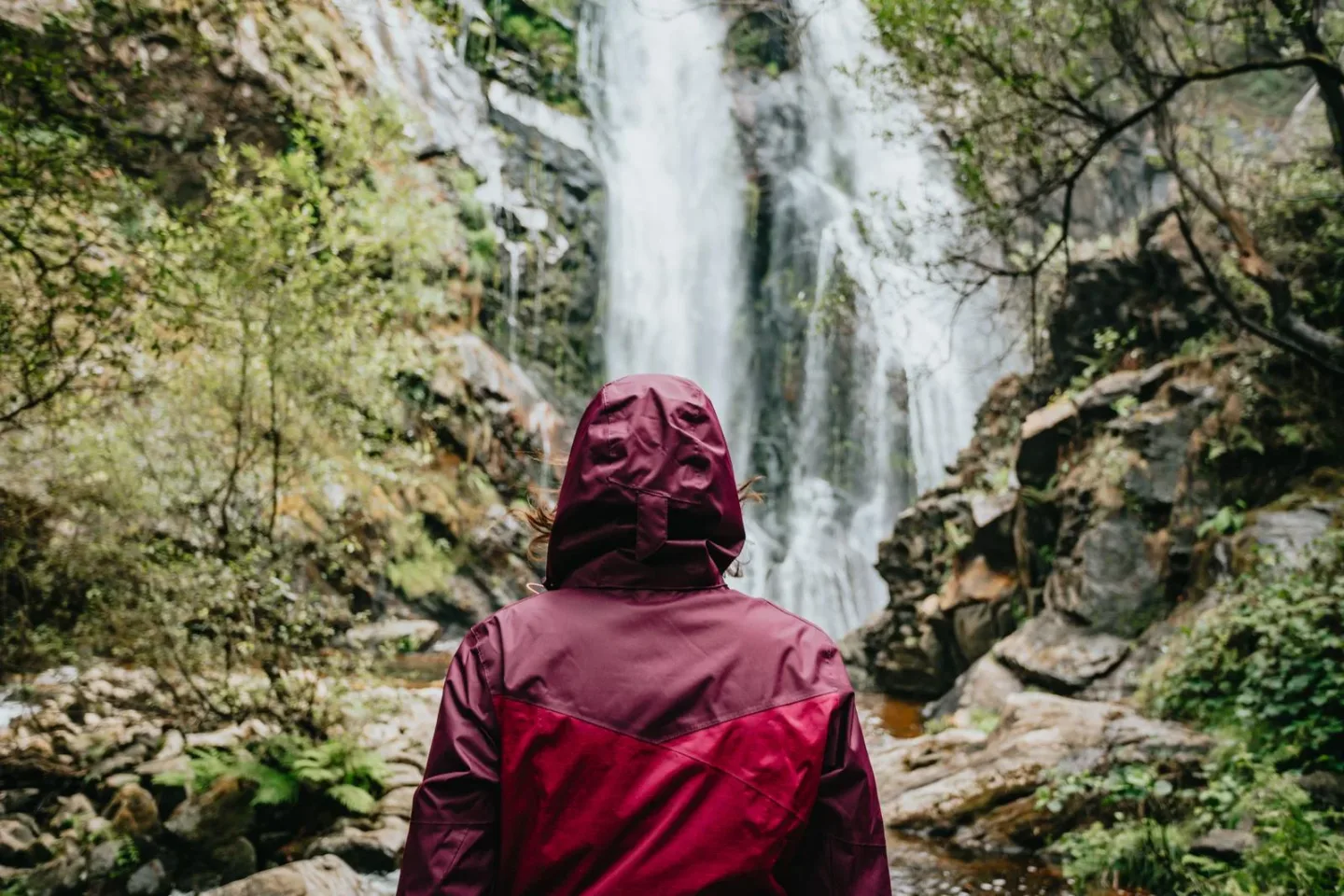
Desert waterfalls surprise people who assume the Southwest stays dry. These cascades prove otherwise, though accessing them requires planning.
Trail #6: Havasu Falls — Havasupai Reservation, AZ
Distance & Difficulty: 10 miles one-way to campground, moderate to strenuous
Location: Supai, Arizona
The turquoise water of Havasu Falls contrasts dramatically against red canyon walls, creating one of the most photographed waterfalls in North America. The falls drop 100 feet into travertine pools that beg for swimming. Getting here requires either a 10-mile hike or a helicopter ride, plus camping permits that book out months in advance.
This waterfall hike demands serious planning. The Havasupai Tribe limits access through a permit system, and reservations open on specific dates each year, selling out within hours. Only tribal members, permit holders, and their registered guests can access Havasu Falls. The trail itself involves hot, exposed hiking with significant elevation changes, so bring plenty of water and sun protection.
Trail #7: Seven Falls — Tucson, AZ
Distance & Difficulty: 8.2 miles round trip, moderate
Location: Sabino Canyon, Tucson
Seven Falls lives up to its name during wet periods, creating a series of cascades and pools along Bear Canyon. The desert setting means this waterfall hike works best after winter rains or summer monsoons. During dry spells, the "falls" might be more like "trickles," so check recent trail reports before committing to the mileage.
The trail crosses Bear Creek multiple times, requiring rock-hopping or wading depending on water levels. Canyon walls provide some shade, but Arizona heat still demands early starts during summer months. When flowing properly, the uppermost fall creates a 40-foot drop into a pool that's become popular for swimming and cliff jumping, though caution is essential.
Southeast Waterfall Hikes
The Blue Ridge Mountains and Southern Appalachians hide hundreds of waterfalls in lush forests.
Trail #8: Crabtree Falls — Blue Ridge Mountains, VA
Distance & Difficulty: 2.9 miles round trip, moderate
Location: George Washington National Forest, near Montebello
Crabtree Falls claims the title of Virginia's highest vertical-drop cascading waterfall at 1,200 feet total, though it's really a series of five major cascades rather than one single drop. The trail switchbacks alongside the falls, offering multiple viewpoints at different tiers. After heavy rain, the volume turns impressive, sending spray across the trail at several points.
The moderate rating comes with caveats. The trail gains 1,500 feet of elevation, and wet rocks near viewing areas have proven dangerous. Multiple fatalities have occurred when people ventured off-trail or climbed on slippery rocks near the falls. Stay on designated trails and behind guardrails.
Trail #9: Dry Falls — Nantahala National Forest, NC
Distance & Difficulty: 0.4 miles round trip, easy
Location: Highlands, North Carolina
Despite the name, Dry Falls flows year-round with a 75-foot curtain of water. The unique feature? You can walk behind the falls on a paved trail, staying completely dry (hence the name). The overhanging cliff creates a natural shelter, putting you between the cascade and the rock face.
This ranks among the most accessible waterfall hikes anywhere, perfect for families or anyone wanting spectacular views without serious effort. The short trail and paved access make it popular, so weekday visits or early mornings help avoid crowds. The viewing area behind the falls stays cool even on hot summer days, with mist and shade dropping temperatures noticeably.
Northeast Waterfall Hikes
The Northeast offers excellent hikes with waterfalls, especially during spring melt when winter snowpack feeds the cascades.
Quick overview





Trail #10: Bash Bish Falls — Massachusetts
Distance & Difficulty: 1.5 miles round trip, moderate
Location: Mount Washington State Forest, MA/NY border
Bash Bish Falls splits around a massive boulder before plunging 60 feet into a pool below, creating a distinctive twin cascade. The falls mark the highest single-drop waterfall in Massachusetts, tucked in a gorge with steep walls. Two trail options provide access: a shorter, steeper route from New York or a gentler approach from Massachusetts.
The pool at the base looks tempting, but swimming is prohibited due to dangerous currents and several drowning deaths over the years. Spring melt provides the best show, though the falls run year-round. The surrounding forest and rocky gorge create a remote feeling despite the relatively short hike.
Trail #11: Kaaterskill Falls — Catskills, NY
Distance & Difficulty: 1.4 miles round trip, moderate
Location: Kaaterskill Clove, near Hunter Mountain
At 260 feet, Kaaterskill Falls holds the title of New York's tallest two-stage waterfall. The cascade drops in two tiers, first plunging 175 feet, then dropping another 85 feet. The falls inspired Hudson River School painters in the 1800s and continues drawing photographers today.
Two viewpoints offer different perspectives: the base trail provides distant views while a steeper trail climbs to the amphitheater between the two tiers. Use extreme caution on the upper trail, which involves scrambling over steep, often slippery terrain. Several people have died after falling from clifftops near the falls. Winter ice climbing attracts experienced climbers when conditions permit.
Hidden Waterfall Hikes You Probably Haven't Heard Of
Beyond the famous cascades lie waterfall hikes that see a fraction of the traffic while delivering equally stunning rewards.
Trail #12: Linville Falls — Blue Ridge Parkway, NC
Distance & Difficulty: 1.6 miles round trip, moderate
Location: Milepost 316.3, Blue Ridge Parkway
While not exactly unknown, Linville Falls gets overshadowed by other Blue Ridge attractions despite offering multiple viewpoints of an impressive two-tiered cascade. The Linville River drops 90 feet into Linville Gorge, one of the East's deepest canyons. Four different overlooks provide varied perspectives, from distant canyon views to close-up vantage points of the upper falls.
The Erwins View trail (1.6 miles round trip) delivers the most dramatic perspective, looking down into the gorge as the river plunges through narrow rock walls. Chimney View offers a closer look at the lower falls from across the gorge. Each viewpoint requires a separate short hike, but none demands serious effort or technical skill.
Trail #13: Snoqualmie Falls — Washington
Distance & Difficulty: 0.5 miles round trip, easy
Location: Snoqualmie, Washington
At 268 feet, Snoqualmie Falls drops 100 feet farther than Niagara Falls and puts out impressive volume from the Snoqualmie River. An observation deck provides immediate access from the parking lot, making this one of the most accessible best waterfall hikes in the Northwest. A steep trail descends 0.5 miles to the base for a different perspective.
The falls generate hydroelectric power through a plant built in 1899, one of the world's first underground powerhouses. Despite the development, the natural spectacle remains impressive, particularly during spring runoff when volume peaks. The ease of access means crowds, but the sheer scale of the falls makes sharing the view worthwhile.
Trail #14: Bridal Veil Falls — Provo Canyon, UT
Distance & Difficulty: 1.1 miles round trip, easy to moderate
Location: Provo Canyon, near Sundance
Bridal Veil Falls drops 607 feet in a misty veil that inspired its name. The double cataract cascades down the mountainside, creating one of Utah's most scenic waterfalls. A paved trail leads to the base, though the final section involves a moderate climb over stairs and switchbacks.
Winter transforms the falls into a massive ice formation popular with ice climbers. Summer brings wildflowers along the trail and cool mist at the base. A tramway once carried visitors to the top, but it closed in 1996 after mechanical failures and weathering made it unsafe. The concrete footings remain visible, adding an industrial-ruins element to the natural setting.
Chase the Cascades, Respect the Route
The best waterfall hikes make you work just enough to amplify the reward when that first glimpse of falling water appears through the trees. Whether grinding up granite steps in Yosemite or strolling a paved path to Dry Falls, each destination delivers something screens can't capture.
These hikes with waterfalls represent starting points rather than complete lists. Regional guidebooks and local hiking groups point toward hundreds more cascades that rarely see traffic. A few practical reminders: wet rocks kill traction, so wear appropriate footwear. Don't swim in pools above waterfalls regardless of how calm they appear.
Respect closure signs, stay on designated trails, and pack out everything you pack in. The falls will keep falling either way - getting there and back safely, while leaving no trace is on us.